You’ve got a bedroom that doubles as an office, a landlord who considers a thumbtack an act of vandalism, and a lease that says “no alterations” in bold. Your desk is a folding table from Argos, your chair is whatever was cheapest on Amazon, and the cable situation behind the monitor looks like a plate of spaghetti someone gave up on. You know a proper home office would make you more productive, but everything seems to require drilling, mounting, or permanent changes that’ll cost you your deposit.
Working from home as a renter has specific constraints that homeowners don’t think about — no wall drilling, no painting (or if you can, you’ll need to paint it back), no built-in shelving, and the constant awareness that you might move in 12 months and need to take it all with you. But a rental-friendly home office can look and function just as well as a permanent one. Every single idea in this guide is removable, deposit-safe, and portable.
In This Article
- The Golden Rule: Nothing Permanent
- Choosing the Right Desk for a Rental
- Seating That Moves With You
- Storage Without Drilling
- Cable Management for Renters
- Lighting Your Workspace
- Making It Look Good
- The Bedroom Office Problem
- Renter-Friendly Home Office Setups by Budget
- What to Ask Your Landlord
- Frequently Asked Questions
The Golden Rule: Nothing Permanent
Every item in your home office should pass one test: can you remove it in under 10 minutes with no trace? If the answer is no, it’s either a landlord conversation or a different product.
What’s Usually Allowed Without Asking
- Freestanding furniture — desks, chairs, shelving units, filing cabinets
- Command strips and adhesive hooks — 3M Command strips hold up to 7.2 kg and peel off cleanly. The damage-free hanging revolution for renters
- Plug-in lighting — desk lamps, LED strips, floor lamps
- Desk clamp accessories — monitor arms, headphone hooks, and lights that clamp to the desk edge. Zero wall contact
What Usually Requires Permission
- Drilling into walls — even for a single shelf bracket
- Painting — some landlords allow it if you repaint on exit
- Removing existing furniture — built-in wardrobes, shelving, curtain rails
- Running new electrical sockets — definitely not
When in doubt, ask. Most landlords are reasonable about small modifications if you approach them properly — more on this at the end.
Choosing the Right Desk for a Rental
Your desk is the centrepiece. For renters, the priority is something that disassembles easily, fits through doorways, and doesn’t damage floors.
Best Desk Types for Renters
- Flat-pack desks — IKEA BEKANT, MICKE, or LAGKAPTEN/ALEX combinations are the rental standard. They assemble quickly, disassemble for moves, and fit through narrow stairwells. The LAGKAPTEN top (about £30) with ALEX drawers (about £70 each) is probably the most popular home office desk in UK rental properties
- Folding desks — if space is tight, a wall-leaning folding desk (the IKEA BJÖRKUDDEN at about £80 or the Habitat Compact at about £100) folds flat against the wall when not in use. No wall mounting needed — they lean against the wall using gravity and friction
- Sit-stand desk converters — sit on top of your existing desk and adjust height. The best sit-stand converters give you standing desk benefits without the permanent furniture commitment. About £120-250
- Trestle desks — a tabletop on two trestle legs. Completely freestanding, easy to move, and you can use different surfaces (a nice oak top on simple legs looks surprisingly premium). IKEA FINNVARD trestles at about £30 each are the go-to
Protecting Floors
Desk chairs on hard floors scratch. Desk legs on carpets leave dents. Both will come out of your deposit.
- Chair mat — essential on hard floors. A clear polycarbonate mat (about £25-40 from Amazon UK) protects the floor under your chair’s castors
- Felt pads — stick self-adhesive felt pads (about £5 for a pack of 100) under every desk and furniture leg
- Rug — under the desk area on hard floors. Protects the surface and defines the workspace zone
Seating That Moves With You
Invest in a good chair — it’s the one item worth spending real money on because it protects your back and it moves with you to every future rental.
Best Chairs for Renters
- Autonomous ErgoChair Core — about £250, excellent ergonomics, disassembles into 3 pieces for moving. Our ergonomic office setup guide recommends this as the best budget ergonomic chair
- IKEA MARKUS — about £200, the most popular high-back office chair in UK rentals. Simple, comfortable, and easy to disassemble. Not as adjustable as the Autonomous but perfectly adequate for most people
- Second-hand Herman Miller or Steelcase — eBay and Facebook Marketplace regularly have ex-office stock for £200-400 (retail: £1,000+). These chairs last decades and are built to be disassembled and reassembled
Avoid
- Chairs with permanent bases — some premium chairs bolt to the floor or need specific mats. Check before buying
- Gaming chairs — most are poorly built, badly ergonomic, and look terrible. The few good ones (Secretlab Titan) cost as much as a proper office chair
Storage Without Drilling
The biggest challenge for renter offices — where do you put things when you can’t mount shelves?
Freestanding Solutions
- IKEA KALLAX — the classic cube storage unit. 2×2 (about £29) on a desk or 4×2 (about £55) freestanding. Add insert boxes, drawers, or doors. Doubles as a room divider in studio flats
- Bookshelf as desk extension — a narrow bookshelf (30-40 cm deep) beside your desk holds reference materials, printer, files, and plants. The IKEA BILLY (about £35) is 40 cm deep and fits against any wall
- Filing cabinet — a 2-drawer metal filing cabinet (about £40-60 from Argos or Amazon UK) slides under a desk and holds documents, stationery, and tech accessories
- Pegboard — the IKEA SKÅDIS pegboard (about £20) leans against a wall or clamps to a desk. Holds headphones, cables, pens, scissors, and notes without a single screw in the wall
Command Strip Solutions
3M Command strips are the renter’s best friend. Use them for:
- Floating shelves — lightweight MDF shelves (under 2 kg loaded) stick to walls with large Command strips. Not for heavy books, but perfect for small plants, photos, and desk accessories
- Cable clips — Command cable clips route cables along walls and desk edges cleanly
- Hooks — for headphones, bags, or a calendar
- Picture frames — Command picture hanging strips hold frames up to 7.2 kg
Cable Management for Renters
Cables are the visual disaster zone of every home office. Fixing them takes 20 minutes and costs under £15.
The Renter-Friendly Cable Kit
- Cable tray — clips or sits under the desk edge. The IKEA SIGNUM (about £8) screws into the desk underside (not the wall), holding power strips and excess cable length out of sight
- Cable sleeves — neoprene zip-up sleeves (about £8 for a 2-metre length) bundle 5-10 cables into one neat tube from desk to floor
- Velcro cable ties — about £5 for a pack of 50. Reusable, adjustable, and infinitely tidier than cable-tying everything into a rigid bundle
- Cable clips — adhesive-backed clips route individual cables along desk edges and walls. About £6 for a pack of 20
The 5-Minute Cable Fix
- Unplug everything from the power strip
- Bundle cables by destination (monitor, charger, lamp, speakers) using velcro ties
- Run bundled cables through a cable sleeve from desk to floor
- Attach the power strip to the cable tray under the desk
- Plug everything back in
According to the HSE’s display screen equipment guidance, trailing cables are a trip hazard that employers should address — even for home workers. Cable management isn’t just aesthetic; it’s a genuine safety improvement.

Lighting Your Workspace
Rental ceiling lights are universally terrible for desk work — too dim, too warm, and in the wrong position (usually the centre of the room, casting shadows onto your desk).
What You Need
- A good desk lamp — the BenQ ScreenBar (about £90) clips to your monitor and lights the desk without screen glare. It’s the single best desk accessory for any home office. Budget alternative: the IKEA TERTIAL (about £9) with a daylight bulb
- Bias lighting — an LED strip stuck to the back of your monitor (about £10). Reduces eye strain by eliminating the contrast between a bright screen and dark wall behind it. Studies show this reduces eye fatigue during long screen sessions
- A floor lamp for ambient light — fills the room without relying on the ceiling fitting. The IKEA HEKTAR (about £50) or any adjustable floor lamp with a daylight bulb works well
Bulb Temperature
- Desk work: 4000-5000K (cool white/daylight). Shows true colours on screen and reduces eye strain
- Evening wind-down: 2700K (warm white). Switch to warm light after work to signal to your brain that the workday is over — especially important when you work and sleep in the same room
Making It Look Good
A renter office doesn’t have to look temporary. Small touches make a big difference.
Quick Wins
- A desk mat — covers scratched or ugly desk surfaces and defines your workspace. The right desk mat in leather or felt elevates the whole setup
- One or two plants — a pothos on the shelf, a small succulent on the desk. Greenery makes any workspace feel less sterile
- A quality monitor arm — clamp-mounted (no drilling), frees up desk space, and looks noticeably cleaner than a monitor sitting on its stock stand. About £25-60 from Amazon UK
- Matching accessories — a consistent colour scheme across your mousepad, cable ties, pen holder, and coasters ties the whole desk together. It sounds minor but the visual coherence is noticeable
What to Skip
- Acoustic panels on walls — they use adhesive that often damages paint. If you need sound dampening, use a thick rug and soft furnishings instead
- Neon signs or heavy wall art — command strips have weight limits, and the chunky adhesive neon signs use often pulls paint off on removal
- Over-decorating — this is still a workspace. Keep the desk surface minimal — a cluttered desk undermines the productivity a good setup creates
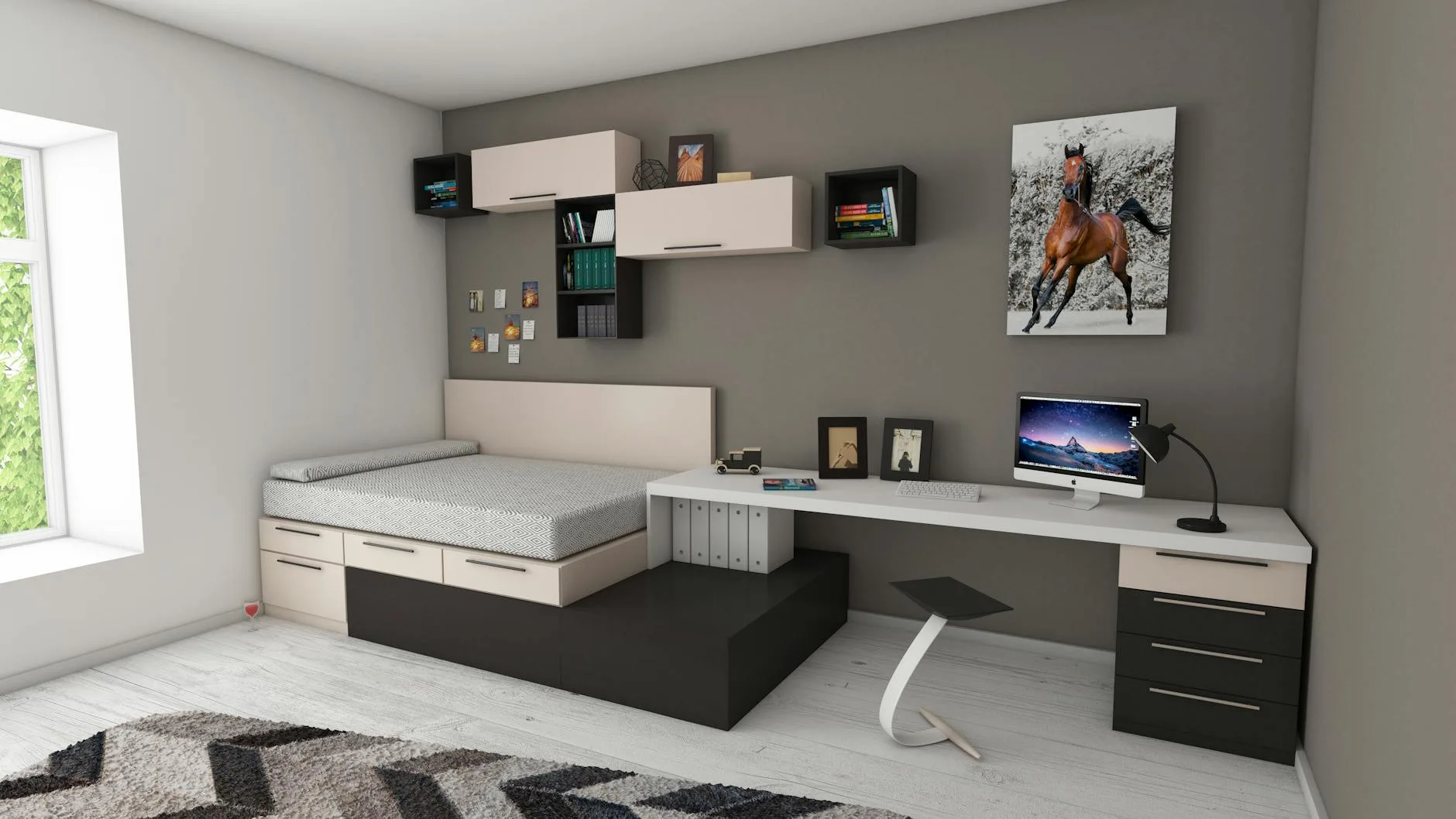
The Bedroom Office Problem
Most UK renters work from their bedroom. It’s the most common home office setup in the country, and it creates a real psychological problem: the room where you work is the room where you sleep, and your brain struggles to switch between the two.
Making It Work
- Physical separation — use a bookshelf, curtain, or the KALLAX unit as a room divider between desk and bed. Even a visual boundary helps your brain register “this side is work, that side is rest”
- End-of-day ritual — close the laptop lid, turn off the desk lamp, move to the other side of the room. The physical action of shutting down the workspace signals to your brain that work is done
- Different lighting — cool daylight at the desk, warm light at the bedside. Smart bulbs (about £10-15 each from Philips Hue or LIFX) let you switch colour temperature without changing bulbs
- Desk facing away from the bed — don’t set up so you can see your desk while lying in bed. The visual reminder of work disrupts sleep. Face the desk toward a wall or window instead
Renter-Friendly Home Office Setups by Budget
Under £200
- Desk: IKEA LAGKAPTEN tabletop + ADILS legs (about £45)
- Chair: second-hand office chair from Facebook Marketplace (about £30-60)
- Storage: IKEA KALLAX 2×2 (about £29)
- Lighting: IKEA TERTIAL desk lamp + daylight bulb (about £12)
- Cable management: cable sleeve + velcro ties (about £13)
- Floor protection: felt pads + chair mat (about £30)
£200-500
- Desk: IKEA LAGKAPTEN + ALEX drawers (about £130)
- Chair: IKEA MARKUS or Autonomous ErgoChair Core (about £200-250)
- Monitor arm: AmazonBasics single arm (about £30)
- Lighting: BenQ ScreenBar (about £90) + LED bias strip (about £10)
- Storage: KALLAX 4×2 + inserts (about £80)
- Accessories: desk mat, cable tray, velcro ties (about £30)
£500+
- Desk: Fully Jarvis standing desk (about £400) — freestanding, no wall mounting
- Chair: second-hand Herman Miller Aeron (about £300-400 from eBay)
- Monitor arm: Ergotron LX (about £100) — the best desk-clamp arm available
- Lighting: BenQ ScreenBar + IKEA floor lamp + smart bulbs (about £120)
- Storage: custom KALLAX configuration with drawer inserts (about £100)
- Accessories: quality desk mat, cable management kit, plants (about £50)
What to Ask Your Landlord
Some modifications are worth asking about — the worst they can say is no.
Reasonable Requests
- “Can I paint one wall a neutral colour? I’ll repaint on exit.” — most landlords agree if you stick to light, neutral colours and commit to repainting. Get it in writing (email is fine)
- “Can I install a small shelf using wall plugs? I’ll fill the holes when I leave.” — filler and touch-up paint cost £5 and take 10 minutes. Many landlords allow this
- “Can I replace the ceiling light fitting with something brighter?” — keep the original fitting, store it safely, and swap it back on exit
How to Ask
Email, not verbal. Something like: “Hi [landlord], I’m working from home and would like to [specific change]. I’ll restore everything to its original condition before the end of the tenancy. Would that be okay?” Keep it simple, specific, and include the restoration plan. Most landlords care about the property being returned in good condition — if you demonstrate you’ll do that, they’re often flexible.
Frequently Asked Questions
Can I claim home office expenses as a renter? If you work from home regularly, you can claim tax relief on a proportion of your household bills (heating, electricity, broadband). HMRC allows a flat rate of £6/week (£312/year) without receipts, or you can calculate the actual proportion based on the room you use and the hours you work. This applies whether you rent or own — check gov.uk working from home tax relief for the latest rules.
Will Command strips actually hold shelves? The large 3M Command picture hanging strips hold up to 7.2 kg per pair. That’s enough for a lightweight floating shelf with small items (plants, photos, a clock). Don’t load them with heavy books or equipment — use freestanding shelving for anything substantial. The key is clean, smooth surfaces: command strips fail on textured wallpaper or freshly painted walls (wait 7 days after painting).
Should I buy an expensive chair if I might move soon? Yes — a good chair is the most portable piece of office furniture you own. It disassembles, fits in a car, and works in every future home. A £250 chair that lasts 10 years is better value than buying a £60 chair three times because it breaks at every move. Your back will thank you too.
How do I deal with bad internet in a rental? Switch to a contract-free broadband provider (Cuckoo, NOW Broadband) so you’re not locked in. If Wi-Fi is weak at your desk, use a powerline adapter (about £30-40) to run ethernet through your electrical wiring — no drilling, no new cables visible. A Wi-Fi mesh system (TP-Link Deco at about £70) is another option for larger flats.
Is it worth setting up a proper home office if I’m only in the rental for a year? A year is about 250 working days. That’s 2,000 hours at your desk. Even for a short tenancy, a comfortable, well-organised workspace pays for itself in productivity and comfort within weeks. Everything in this guide is portable — it all moves with you to the next place.