An IKEA Bekant can still be worth buying in the UK, but the answer depends on which Bekant you mean. A new fixed setup only makes sense when the exact compatible top and underframe are both orderable and you value its 80cm depth. A clean used fixed Bekant is usually the best-value route. The discontinued electric Bekant is a different proposition: buy one only if it is complete, inexpensive and proven to travel smoothly through its full height range.
In This Article
- Direct verdict
- Why Bekant became popular
- What is still sold in the UK?
- Fixed Bekant review
- Used electric Bekant
- Bekant vs TROTTEN and MITTZON
- Two external alternatives
- Used-buying checklist
- Final recommendation
- Frequently Asked Questions
Direct Verdict: Is an IKEA Bekant Worth Buying Now?
For most buyers, Bekant is now a legacy or partial system rather than a normal current desk range. IKEA UK still publishes live pages for selected fixed components, but the former range page no longer presents a complete family and the electric sit-stand Bekant is absent from IKEA’s current UK desk ranges. That makes the model, condition and completeness more important than the name.
- Current fixed setup: worthwhile only when the matching components are available and the 80cm-deep surface suits the room.
- Used fixed Bekant: the strongest-value version, provided the top is dry and undamaged and the frame is complete.
- Used electric Bekant: a cautious buy only after an in-person full-cycle test; current warranty-backed sit-stand desks are safer for most people.
The fixed frame is not a sit-stand desk. Its 65–85cm range is selected while assembling the legs. Changing it later means unloading and reassembling the desk; it is not an everyday adjustment.
Why the Bekant Became Popular
Bekant earned its following by combining a generous office-sized surface with a plain steel frame and simple cable net. The 160 × 80cm version gives a keyboard, notebook and one or two monitors room to coexist. That extra depth is useful because many home-office desks stop at 50–60cm and push larger displays too close to the user.
It also arrived in several sizes and finishes, looked neutral enough for work or home, and allowed the seated height to be chosen during assembly. Used examples are common, replacement fixings are understandable, and the unfussy design works with most chairs and monitor arms. In other words, the hype was less about glamour than getting a proper office footprint from a familiar retailer.
Those strengths have not vanished, but IKEA’s newer TROTTEN and MITTZON families now answer the same needs with clearer current availability. Bekant should therefore be judged on the exact deal in front of you, not on its old reputation.
What Bekant Is Still Sold in the UK?
IKEA UK currently has live product pages for selected fixed Bekant parts, including the 160 × 80cm underframe. That page specifies a 65–85cm assembly range, a 100kg maximum load and the need to complete it with a matching 160cm Bekant top. Selected tops also appear separately. Availability can vary by component and location, so check the article numbers and size compatibility rather than assuming any Bekant top fits any frame.
Assembly-Selected Height, Not Daily Adjustment
The legs are telescopic during construction, but there is no crank, motor or quick-release mechanism. To change the fixed desk from one height to another, unload it, turn it over and reset the legs. Set it once for seated ergonomics and treat it as fixed in normal use.
The Electric Bekant Is a Used-Only Question
The former powered frame adjusted through the working day, but it is no longer part of IKEA’s live UK desk ranges. Old official brochures are useful for identifying the product, not for proving that it is currently sold or covered by a new-purchase guarantee. Any electric Bekant found now should be assessed as used electrical furniture with age and condition unknown.

Fixed Bekant Review: Strengths and Weaknesses
Depth and an Uncluttered Surface
The 80cm depth remains Bekant’s best feature. It creates a more comfortable monitor distance and leaves space in front for writing. The rounded edge is kinder to forearms than a sharp slab, while the open frame avoids drawers dictating where knees and chair arms must go. Our monitor-size guide explains why viewing distance matters more as displays get larger.
A Serviceable Top Rather Than Fine Furniture
Bekant tops are practical office surfaces, not solid timber. Inspect used examples for swollen edges, chipped corners and damaged mounting points. A superficial mark in the centre is less concerning than moisture entering an edge or a screw insert pulling out underneath.
Load Capacity Does Not Guarantee Stability
IKEA states 100kg for the current 160 × 80cm frame, but a static load figure does not describe side-to-side movement or the leverage from a heavy clamp-on monitor arm. Build the frame square, level the feet and retighten fixings after settling. Keep the arm clamp clear of weak or damaged areas. Our desk stability guide covers the difference between load and movement.
Cable Management and Assembly
The under-desk net is handy for light leads and a power strip, although it sags when overfilled. Assemble the desk upside down on cardboard, leave bolts slightly loose until the frame is square, then tighten in stages. A 160 × 80cm top is awkward on narrow stairs and may not turn through a small landing, so measure the complete access route before collection.

Should You Buy a Used Electric Bekant?
Only if the price reflects the risk and you can test it in person. Run the loaded desk from its lowest point to its highest and back again. Both legs should move evenly without grinding, clicking, hesitation or an error at either end. Confirm that the handset, control box, transformer and cables are present and undamaged.
An untested or disassembled example should be valued as potentially non-working. “It only needs a fuse” is not evidence. A video is better than nothing, but it cannot show how the frame behaves with your monitor load or whether intermittent faults appear after several cycles.
The main argument for buying one is a very low price for a complete, smooth-running desk. The argument against is stronger: replacement electronics can be difficult to source, transport can twist an assembled frame, and current TROTTEN, MITTZON and external sit-stand desks are sold with live support and clear specifications.
Bekant vs TROTTEN and MITTZON
TROTTEN and MITTZON are the natural comparisons because they are current IKEA UK office systems rather than unrelated marketplace desks.
| Desk | Adjustment | Depth | Best for |
|---|---|---|---|
| Fixed Bekant | Fixed; 65–85cm selected during assembly | 80cm on the common 160cm top | Used value and a deep work surface |
| TROTTEN fixed | Fixed | 80cm at 160cm width | Simple current value option |
| TROTTEN crank | Manual sit-stand; 70–120cm | 80cm at 160cm width | Motor-free height changes |
| TROTTEN electric | Electric sit-stand; 69–116cm | 80cm at 160cm width | Current value electric route |
| MITTZON fixed | Fixed; 65–85cm selected during assembly | 80cm at 160cm width | Closest modern fixed successor |
| MITTZON electric | Dual-motor electric sit-stand | Available in current sizes | Premium IKEA sit-stand route |
TROTTEN Is the Value Successor
The current fixed 160 × 80cm TROTTEN keeps the useful office footprint and carries IKEA’s stated ten-year guarantee. The range also includes a crank sit-stand model and an electric model. The crank version is attractive when you want real height changes without motors; the electric version adds collision detection and a child lock. For many buyers, either is more rational than gambling on an ageing electric Bekant.
MITTZON Is the Closest Modern Successor
The fixed MITTZON 160 × 80cm desk mirrors Bekant’s 65–85cm assembly-selected height but explicitly says that changing it requires leg reassembly. It adds a more developed cable tray and plug-in compartment. Electric MITTZON desks use dual motors and memory settings, making them the premium IKEA choice for regular sit-stand movement.
If you only sit, compare a used fixed Bekant with fixed TROTTEN and MITTZON. If you change height during the day, compare current crank or electric desks with each other—not with the fixed Bekant frame.
Two Useful External Alternatives
These two desks fill specific gaps. They are not substitutes for the Bekant analysis and there is no generic fixed alternative here because TROTTEN already answers that need more naturally.
ErGear 160 × 80cm: Value Electric Choice
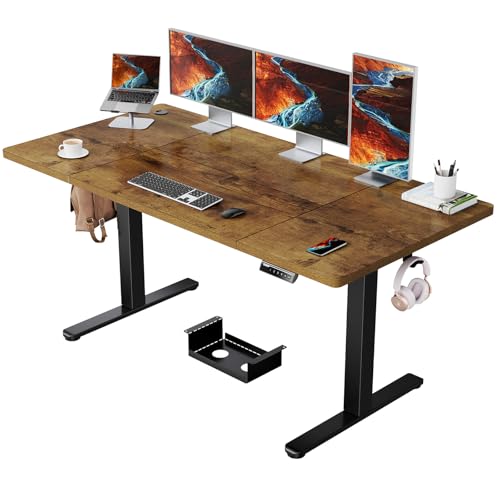
ErGear is the practical option when the missing feature is powered adjustment rather than a premium frame. Its current listing identifies a 160 × 80cm surface and a 100kg load claim. Check the exact height range, top construction, handset and warranty shown at checkout, because those details determine fit more than the headline capacity.
- Choose it for: a large electric desk at a value-led position.
- Watch for: joined desktop sections and less specification detail than the premium choice.
FlexiSpot E5 160 × 80cm: Premium Electric Choice

The FlexiSpot E5 is the better fit for frequent height changes. The selected version pairs a one-piece 160 × 80cm top with dual motors, three-stage legs, memory controls and anti-collision protection. Its broader adjustment system is more useful for shared desks or taller users than a basic single-motor frame.
- Choose it for: regular sit-stand use, a one-piece top and a wider ergonomic range.
- Watch for: paying for motors and controls that add little value if the desk stays at one height.
Used-Bekant Buying Checklist
- Top condition: inspect every edge for swelling, chips and lifted edging.
- Fixings: check for missing bolts, brackets, feet and cable-net fittings.
- Frame: rock it gently and inspect mounting points for stripped threads or extra holes.
- Monitor arm: confirm the clamp position is flat, intact and clear of the frame.
- Dimensions: verify the exact size rather than relying on the seller’s description.
- Access: measure doors, stairs, car or van and the turn into the room.
- Electric model: test a full loaded cycle and confirm every electrical component.
Disassembling the desk usually makes transport safer, but label every fixing and photograph the cable routing first. Our flat-pack assembly guide can prevent a bargain becoming a bag of mystery bolts.
Final Recommendation
For a current fixed Bekant setup, buy only when the matching top and underframe are both orderable and its 80cm depth is the reason you want it. MITTZON is the cleaner current successor; TROTTEN is the simpler value alternative.
For a used fixed Bekant, the answer is usually yes. A complete, dry and stable example at a sensible local price preserves the qualities that made Bekant popular without introducing motor risk.
For a used electric Bekant, the answer is usually no unless it is cheap, complete and fully tested. TROTTEN electric, MITTZON electric, ErGear and FlexiSpot E5 all offer clearer current routes. The badge should not outweigh support, condition and a successful full-cycle test.
Frequently Asked Questions
Is Bekant discontinued in the UK?
The complete Bekant desk family is no longer presented as a current UK range, but selected fixed tops and underframes still have live IKEA UK product pages. The electric sit-stand Bekant is not in the current range.
Can a fixed Bekant be adjusted while in use?
No. Its 65–85cm height is selected during assembly. Changing it later requires unloading and reassembling the legs; it is not a sit-stand mechanism.
Is a used fixed Bekant worthwhile?
Often, yes. Prioritise a complete frame, an undamaged top, firm mounting points and the correct size for the room and access route.
Is a used electric Bekant safe to buy?
Only after an in-person loaded test from minimum to maximum height and back. Missing electronics, uneven movement or an untested claim should reduce its value sharply.
Bekant or TROTTEN?
Choose a good used fixed Bekant for depth and value. Choose current TROTTEN for easier availability, warranty support, or crank and electric sit-stand choices.
Bekant or MITTZON?
MITTZON is the closer current successor, especially in fixed 160 × 80cm form. Its height is also selected during assembly, while electric MITTZON adds dual motors and memory controls.
Can Bekant support a monitor arm?
The official fixed-frame load figure is ample for normal office equipment, but inspect the top and clamp point carefully. Monitor-arm leverage can reveal looseness that a static load figure does not describe.