Floating desks work best when they solve one specific problem: you need a real work surface, but a normal desk would swallow the room. Good floating desk ideas UK homes can actually use are not just pretty shelves on Pinterest. They need enough depth for a laptop, enough wall strength to stay put, and enough chair clearance that you are not working with your shoulders around your ears.
In This Article
- When a Floating Desk Actually Works
- Measure the Wall, Chair Space and Screen Distance
- Floating Desk Ideas UK: Six Layouts That Save Space
- What to Buy and What It Should Cost
- Mounting, Load Limits and Wall Types
- Storage, Cable Routing and Lighting
- Renter-Friendly and No-Drill Alternatives
- Bottom Line
- Frequently Asked Questions
When a Floating Desk Actually Works
A floating desk is not automatically the best desk for a small room. It works when the wall is useful, the tasks are modest, and you can keep the surface clear. If you need three monitors, a printer, speakers, a docking station and piles of paper, a wall-mounted shelf will feel like a compromise every day.
Where floating desks shine is in rooms that have awkward wall space but not enough floor space for a normal desk: a box bedroom, a landing, an alcove beside a chimney breast, a bay window corner, or the end of a living room where a desk with legs would block a walkway.
Best use cases
Floating desks suit:
- Laptop work: writing, admin, study, video calls and light creative work.
- Hybrid working: two or three work-from-home days rather than a full professional studio setup.
- Kids’ rooms: homework spaces where floor area matters more than huge desktop depth.
- Guest rooms: a desk that does not stop the sofa bed or spare bed working.
- Alcoves: dead space where a custom shelf can look built-in.
They are weaker for heavy gaming PCs, large dual-monitor arms, sewing machines, printers and anything that encourages leaning hard on the front edge. A floating desk can be strong, but it is still only as good as the wall, fixings and brackets behind it.
The biggest mistake
The usual mistake is choosing a desk because it looks slim in a product photo, then discovering it is too shallow for a laptop and separate keyboard. A 30cm-deep shelf might hold a laptop. It will not make a comfortable day-long workstation.
If the room is tiny, read our guide to creating a home office in a small flat alongside this one. The room layout matters as much as the desk itself.
Measure the Wall, Chair Space and Screen Distance
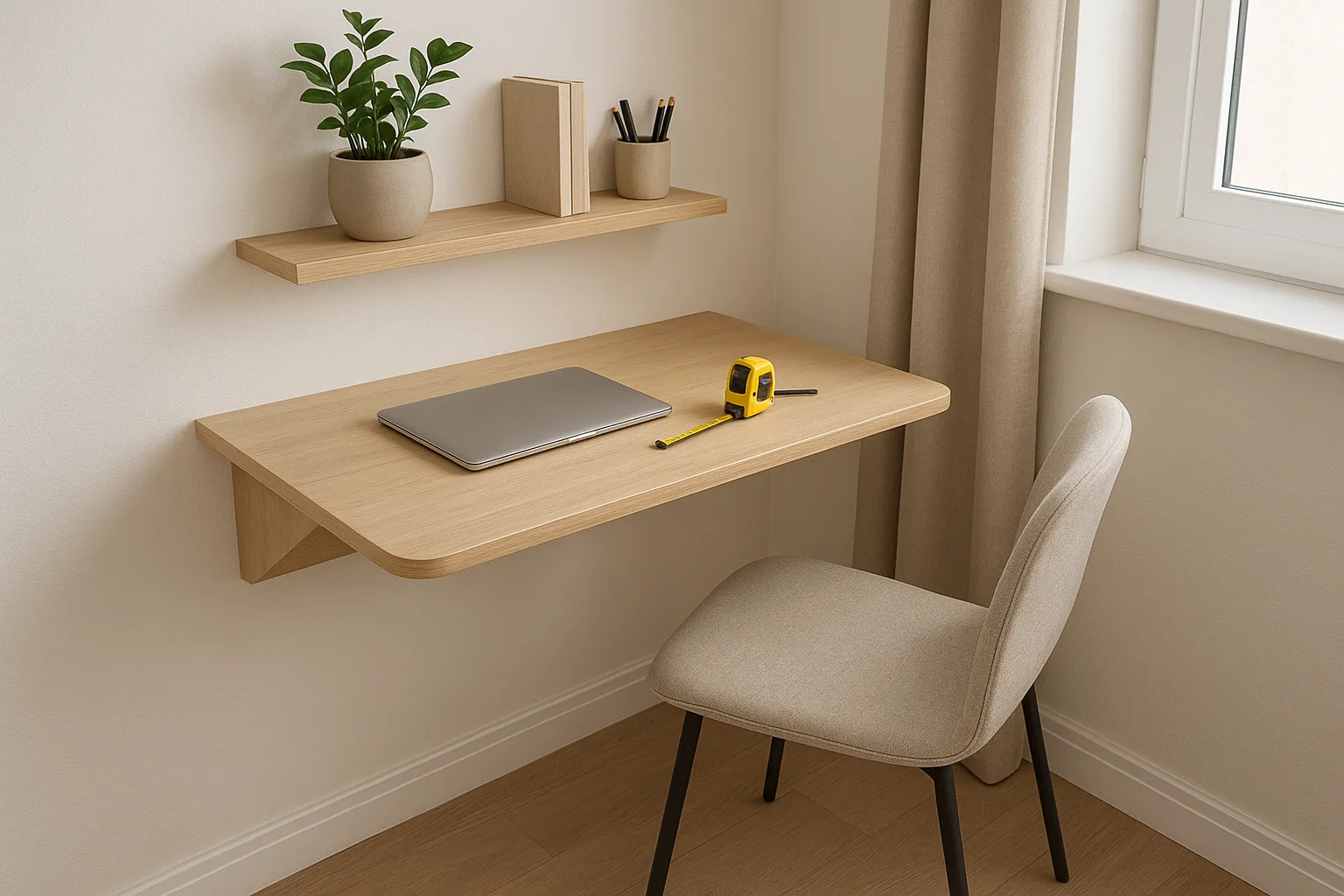
Before buying a floating desk, measure the working position as if you already own it. Mark the proposed desktop on the wall with low-tack tape. Put a chair in front of it. Sit there for five minutes. If the door catches the chair, your knees hit a radiator, or the window glare hits the screen, the idea needs adjusting.
The Health and Safety Executive notes that poorly designed display screen equipment workstations can contribute to neck, shoulder, back, arm and eye strain; its DSE guidance is useful even if you are setting up your own home workspace rather than managing staff.
Useful dimensions
For a laptop-only setup, aim for a desktop at least 80cm wide and 45cm deep. That gives room for the laptop, mouse and notebook without feeling like a train table. For a laptop plus separate keyboard and monitor, 100-120cm wide and 55-60cm deep is much better.
As a rough guide:
- Very compact desk: 70-80cm wide, 35-45cm deep; occasional laptop use only.
- Proper small workstation: 90-110cm wide, 50-60cm deep; laptop, keyboard and small monitor.
- Comfortable alcove desk: 120-140cm wide, 55-65cm deep; better for longer work sessions.
Leave at least 75-90cm of chair pull-out space if you can. Less can work in a pinch, but you will start twisting sideways to get in and out.
Height matters more than people expect
Most fixed desks sit around 72-75cm high. That is a decent starting point, but chair height, your leg length and whether you use a keyboard tray all change the feel. If you mount the desk too high, your shoulders lift. Too low, and your wrists bend upwards.
Our ergonomic desk setup checklist is worth checking before you drill. A floating desk is harder to adjust later than a freestanding desk, so the height decision deserves more than a guess.
Floating Desk Ideas UK: Six Layouts That Save Space
The best floating desk layout depends on what the room is already trying to do. A desk in a bedroom needs to disappear visually at night. A landing desk needs to avoid becoming a trip hazard. A living-room desk needs cable control because everyone can see the mess.
1. Alcove shelf desk
An alcove between a chimney breast and wall is the easiest place to make a floating desk look intentional. Fit a worktop or timber desktop across the width, support it with battens on three sides, and add a cable grommet near the back corner. The three-sided support makes the desk feel much more solid than two small brackets under a shelf.
Budget about £35-£80 for a cut-to-size laminate or pine top from B&Q, Wickes or a local timber yard, plus £10-£25 for battens, screws and wall plugs. If you use oak, bamboo or a thicker kitchen worktop offcut, the desktop can easily move into the £100-£200 range.
This is my favourite option for a small Victorian terrace or 1930s semi with chimney alcoves. It looks built-in without needing fitted furniture money.
2. Fold-down wall desk
A fold-down desk is the smallest-footprint option because it closes against the wall when not in use. It suits guest rooms, kids’ rooms and multipurpose spaces where the desk only needs to appear for homework or evening admin.
Expect to pay about £45-£120 for a basic fold-down wall desk from Amazon UK, Wayfair or The Range. Better cabinet-style versions with shelves often sit around £120-£250. Check the depth when open, not just the neat closed size.
The trade-off is stability. A fold-down desk is rarely as solid as a fixed desktop on brackets. Fine for a laptop and notebook. Less convincing for a heavy monitor arm.
3. Window-wall floating desk
Mounting a floating desk under or beside a window can make a small bedroom feel less boxed in. Natural light helps, and the chair can tuck in without creating a dark corner. The risk is glare. A screen directly facing a bright window is not fun.
If the desk faces the window, use a laptop riser and blinds that diffuse light. If the desk sits along the wall beside the window, you usually get better side light with less reflection. Our guide to reducing monitor glare goes deeper on screen angle and brightness.
4. Landing or hallway homework shelf
A narrow floating desk on a landing can work for occasional study, household admin or a shared laptop station. Keep it shallow, tidy and away from the main walking line. A 30cm-deep shelf might work here because it is not meant for full-day use.
Use rounded corners if people pass close by. Avoid open cable loops. Add a wall light rather than a desk lamp if surface space is tight.
5. Cupboard office
If you have a shallow cupboard, remove the lower shelves and fit a floating desktop inside. Add shelves above, a slim LED light, and a power point if one can be installed safely by a qualified electrician. Close the doors and the office disappears.
This setup is excellent for visual clutter. It is less good for heat if you run a desktop PC or large monitor in an enclosed cupboard. For laptop work, it is a neat option.
6. Floating corner desk
A triangular or L-shaped floating corner desk can use a dead corner without taking over the room. It is trickier to build because both walls must be suitable, and the front corner needs enough support. Done well, it gives more mouse space than a straight narrow shelf.
If you are tempted by a bigger corner setup, compare it with our corner desk layout guide. Sometimes a compact corner desk with slim legs is simpler and safer than a heavily loaded floating corner.
What to Buy and What It Should Cost
There are three main routes: ready-made wall desks, DIY desktops on brackets, and semi-built-in alcove desks. The right choice depends on whether you rent, how confident you are with fixings, and whether the wall is masonry, timber stud or plasterboard.
Ready-made wall desks
Ready-made floating desks are convenient because the storage, hinges and finish are already sorted. John Lewis wall-mounted desks can sit around £349-£399 for furniture-style units, while Wayfair, Amazon UK and The Range often have simpler fold-down desks from about £50-£180. IKEA’s wall shelves, brackets and compact desk parts can also work for custom setups, though you need to check load ratings carefully.
The advantage is neatness. The disadvantage is depth. Many attractive wall desks are designed for occasional writing, not a full keyboard, mouse and monitor setup.
DIY desktop and brackets
For value, a cut timber or laminate desktop with heavy-duty brackets is hard to beat. A decent 100-120cm desktop can cost about £35-£120 depending on material. Heavy-duty steel brackets are often £15-£40 a pair, and good fixings might add £5-£15.
Do not buy the cheapest decorative shelf brackets and expect them to behave like desk supports. A desk has leverage. The front edge puts far more strain on the wall than a normal shelf holding books.
Semi-built-in alcove option
An alcove build with timber battens on three sides is often the strongest-looking budget option. Materials might cost £60-£180, depending on desktop finish, paint and cable fittings. A carpenter will cost more, but in an awkward alcove the result can look far better than a shop-bought desk squeezed into a gap.
If you are trying to keep the whole setup tidy, prioritise a good chair and monitor position over decorative extras. Our guide to desk accessories you actually need is blunt about what earns its place.
Mounting, Load Limits and Wall Types
This is the section to take seriously. A floating desk is furniture attached to a wall, and a loaded desk can pull hard on its fixings. If you are unsure about the wall type, wiring, pipes or load, use a competent tradesperson.
Masonry walls
Brick and block walls are usually the easiest for floating desks. Use suitable wall plugs or masonry anchors, drill the correct size holes, and avoid crumbly old plaster as the only support. The fixing needs to bite into solid masonry, not just the skim coat.
For a desk that will hold a laptop, monitor and arms resting on the front edge, choose heavy-duty brackets with a clear load rating. Do not run them near their limit. If the bracket says 40kg per pair, that does not mean you should load 39kg on a 60cm-deep desk and lean on it every day.
Stud walls
Stud walls can work well if you fix into timber studs or add a proper timber support rail. Use a stud finder, then confirm carefully. A batten fixed across several studs spreads the load better than two brackets fixed into random plasterboard.
If the stud positions do not match where you want the brackets, rethink the desktop width or use a support rail. Floating desks punish wishful thinking.
Plasterboard-only fixings
Plasterboard fixings have their place, but I would not hang a main work desk from plasterboard alone unless the product and fixings are explicitly rated for that load and use. A light fold-down desk for occasional laptop work is one thing. A deep desk with a monitor arm is another.
The HSE’s DSE workstation checklist also nudges you to look at furniture, keyboard, mouse, screen and work environment together. That matters here: a desk that is technically mounted but too shallow, too high or too wobbly is still a bad workstation.
Storage, Cable Routing and Lighting
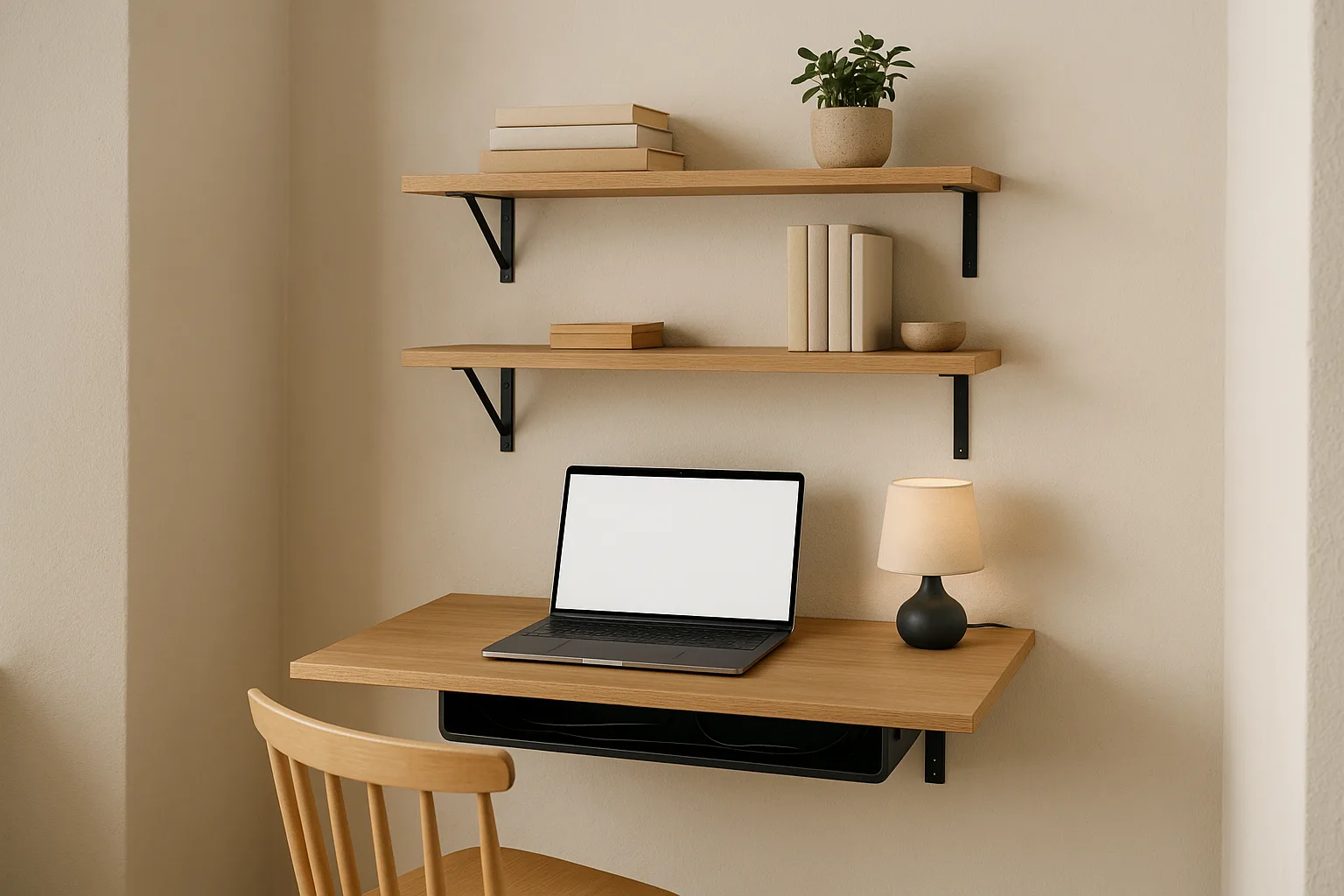
Floating desks look calm in photos because the cables have been hidden and the stationery has been removed. Real rooms need storage. Plan it before you fit the desk.
Keep storage above or beside, not all on the desktop
Use a slim shelf above for notebooks, a wall pocket for documents, or a small drawer unit on castors that can move away when the room is used for guests. Avoid loading the desktop with everything you own. The whole point is keeping floor space clear.
If you need a monitor, consider a small stand rather than a heavy monitor arm. Monitor arms are brilliant on solid desks, but they concentrate force at one clamp point. On a floating desk, that can be the worst possible load.
Route cables vertically
For laptop work, the cleanest setup is a socket below or beside the desk, a short cable run, and a clip-on cable channel down the wall. Cable trunking costs about £5-£15 from Screwfix, B&Q or Amazon UK. A simple adhesive cable tray under the desk costs about £10-£25.
Avoid dangling extension leads from the desktop. They look messy and tug on chargers. If you need new sockets, use a qualified electrician rather than trailing cables across a doorway.
Use wall lighting
A floating desk has limited surface area, so wall lights and clamp lights are useful. A basic clamp lamp can cost £12-£30 from IKEA, Argos or Amazon UK. Better adjustable wall lights are often £35-£90. If eye comfort is the issue, our desk lamp eye comfort guide explains brightness, glare and colour temperature.
Renter-Friendly and No-Drill Alternatives
If you rent, check the tenancy agreement before drilling. Some landlords are fine with neatly filled holes; others are not. A floating desk that risks deposit arguments may not be worth it.
Leaning desks
A ladder-style leaning desk gives a floating look without permanent wall mounting. It still needs anti-tip straps in many cases, but the load sits partly on the floor. Expect to pay about £60-£180 from IKEA, John Lewis, Wayfair or Amazon UK depending on finish.
It is not as minimal as a true floating desk, but it is easier to move and safer on questionable walls.
Narrow console desk
A 30-40cm-deep console desk can sit against a wall and do the same job as a shallow floating desk. It has legs, which some people are trying to avoid, but it also avoids drilling. For occasional laptop work in a hallway or bedroom, this can be the sensible answer.
Budget about £50-£150 for simple options from Argos, IKEA or Dunelm, and more for solid wood. Pair it with a folding chair only if you use it occasionally. For daily work, a proper chair matters.
Existing furniture hacks
A deep shelf in a wardrobe, a dressing table with better cable routing, or a slim dining table at one end of the living room may beat a risky wall-mounted desk. Our home office ideas for renters cover more no-drill ways to make a workspace feel intentional.
No judgement if the right answer is not a floating desk. The best small-room setup is the one you will actually use without dreading it.
Bottom Line
Floating desks are best for laptop-first workstations, alcoves, guest rooms, kids’ homework spots and awkward small-room walls. For most UK homes, the sweet spot is either a 90-120cm wall-mounted desk with proper brackets or an alcove desktop supported on battens. Budget about £60-£180 for a practical DIY setup, £50-£180 for a basic fold-down unit, or £300+ for a furniture-style wall desk.
Do the boring checks first: wall type, fixing strength, desktop depth, chair pull-out space, screen glare and cable routing. A floating desk should make the room easier to live in, not create a wobbly shelf you are nervous to lean on.
Frequently Asked Questions
How deep should a floating desk be? For occasional laptop use, 40-45cm can work. For a proper workstation with a keyboard and small monitor, aim for 55-60cm if the room allows it.
Can a floating desk hold a monitor? Yes, if the desk, wall, brackets and fixings are rated for the load. A small monitor on a stand is usually safer than a heavy monitor arm clamped to the front edge.
How much does a floating desk cost in the UK? Basic fold-down desks start around £45-£80, stronger DIY bracket setups are often £60-£180, and furniture-style wall desks can cost £300-£400 or more.
Are floating desks safe on plasterboard walls? They can be, but only with suitable fixings and realistic loads. For a daily work desk, fixing into studs, masonry or a properly supported rail is usually safer than relying on plasterboard alone.
Are floating desks good for renters? Only if the tenancy allows drilling and you can repair the wall neatly. Leaning desks, narrow console desks and foldaway freestanding desks are safer no-drill alternatives.
What is the best floating desk idea for a tiny bedroom? A fold-down wall desk or a narrow alcove desk usually works best. Keep it laptop-first, use wall lighting, and avoid deep shelves that block the room when the chair is pulled out.