If you want the desk frame that survives heavy monitors, house moves and years of height adjustments, metal wins most of the time. Wood can last beautifully in a fixed home office, but the weak points are different: screw holes, humidity movement and joint wear. The real metal vs wood desk frame decision is not about looks; it is about load, movement and how easy the frame is to tighten or repair later.
In This Article
- Frame Material vs Desktop Material
- What Actually Fails First
- Metal Desk Frames in Daily Use
- Wood Desk Frames in Daily Use
- Standing Desks, Monitor Arms and Heavy Loads
- Cost, Repairs and Replacement Parts
- Metal vs Wood Desk Frame Verdict by Setup
- Buying Checklist Before You Order
- Frequently Asked Questions
Frame Material vs Desktop Material
The first trap is mixing up the frame with the desktop. A bamboo, solid oak or MDF top tells you very little about the frame underneath it. A desk can have a nice wooden surface bolted to a steel underframe, or a cheap chipboard top sitting on wooden trestles.
This article is about the frame: the legs, rails, brackets, crossbars, fixings and lifting columns that keep the desk upright. If you want the broader surface comparison, our separate guide to desk materials explained covers MDF, solid wood and bamboo tops in more detail.
The simple rule
For durability, judge the frame by the job it has to do:
- Static writing desk: a good wooden trestle or solid wood leg frame can be fine for years.
- Dual-monitor work desk: a powder-coated steel frame is usually the safer bet.
- Sit-stand desk: metal is the normal choice because the lifting columns, motors and rails need tight tolerances.
- Rented flat or frequent moves: metal frames tend to survive dismantling and reassembly better.
That last point matters more than people admit. A frame that is perfect on day one can become annoying after the second move if the screw holes loosen or the brackets no longer pull square.
Why this matters for ergonomics
The HSE’s display screen equipment workstation checklist asks users to look at furniture stability, posture and whether equipment can be arranged comfortably. A frame that wobbles under normal typing makes the whole workstation worse, even if the chair and monitor height are right.
That is why I would rather buy a plain steel frame with a modest top than a beautiful-looking desk with a weak base. You can upgrade a top later. A flexing frame is the desk.
What Actually Fails First
Desk frames rarely fail in a dramatic way. They usually become irritating first: a tiny wobble, a creak when you lean forward, a leg that needs tightening again, or a monitor arm that makes the whole setup bounce.
The common failure points
The material matters, but the joints matter more. Look at these before you fall for the finish:
- Bolted joints: cheap bolts and thin brackets loosen faster than the frame material itself.
- Screw holes: wood and chipboard can lose bite after repeated reassembly.
- Crossrails: frames without a rear or central rail are more likely to rack side to side.
- Foot design: narrow feet make a tall standing desk feel nervous, especially on carpet.
- Coating damage: chipped metal can rust in damp rooms, though indoor desks rarely rot away.
On budget desks from Argos, Wayfair or Amazon UK, the weak point is often not “wood versus metal” in a pure sense. It is thin fixings, short screws and vague instructions. A £90 desk can be perfectly usable, but it will not behave like a £300 frame-only product once you add a 34-inch monitor and a clamp arm.
The move-house test
If you dismantle a desk once, most frames survive. If you dismantle it three times, the difference becomes obvious. Steel frames usually rely on machine bolts into threaded inserts or metal brackets. Wooden frames often rely on screws biting into wood or engineered board.
That does not make wood bad. It means you should treat a wooden frame as furniture, not kit. If you expect to move flats, change layouts or swap desktops, metal is less fussy.
Metal Desk Frames in Daily Use
Metal desk frames usually mean powder-coated steel, sometimes with aluminium trim or cast metal feet. In the UK home-office market, the strongest value options tend to be steel: IKEA TROTTEN underframes, FlexiSpot E7/E7 Pro frames, Friska frames and the many no-name dual-motor bases sold through Amazon UK.
Where metal wins
A good metal frame has three practical advantages:
- It resists racking: steel rails and brackets cope well with side-to-side pressure.
- It holds threaded fixings: bolts can be tightened without chewing up the frame.
- It suits accessories: monitor arms, cable trays, PC holders and modesty panels are easier to attach cleanly.
The difference is most obvious with sit-stand desks. A FlexiSpot E7 Pro frame is usually around £329.99 to £479.99 depending on offers and configuration from FlexiSpot UK. IKEA’s manual TROTTEN sit/stand underframe is much cheaper at about £150, but it is still a metal frame because moving columns and adjustable rails need a rigid structure.
For a fixed desk, a basic steel frame from Amazon UK or Wayfair often sits around £70-£180. Spend closer to £200-£350 and you should expect thicker rails, better feet and cleaner fixings, not magic.
Where metal loses
Metal is not perfect. Cheap powder coating chips if you drag the frame across concrete or knock it with tools during assembly. Hollow legs can ring or creak if the fit is poor. Budget frames can also look office-like rather than warm.
I would also avoid very cheap “industrial style” frames that use thin decorative metal tubes with no proper bracing. They look strong in product photos, but the wall thickness and joint design decide the real lifespan.
What I would buy
For a normal dual-monitor home office, I would buy a powder-coated steel frame with a central rail, adjustable feet and proper bolt fixings. The sweet spot is usually:
- Budget fixed frame: £80-£150 from Amazon UK, Wayfair or IKEA, if the reviews mention no wobble.
- Manual sit-stand frame: about £150 for IKEA TROTTEN if you can live with the crank.
- Dual-motor electric frame: about £300-£500 for FlexiSpot, Yo-Yo Desk, Friska or similar UK-stocked brands.
If the desk will hold two monitors, speakers and a laptop dock, I would skip the cheapest frame. Saving £60 is not worth years of screen shake.
Wood Desk Frames in Daily Use
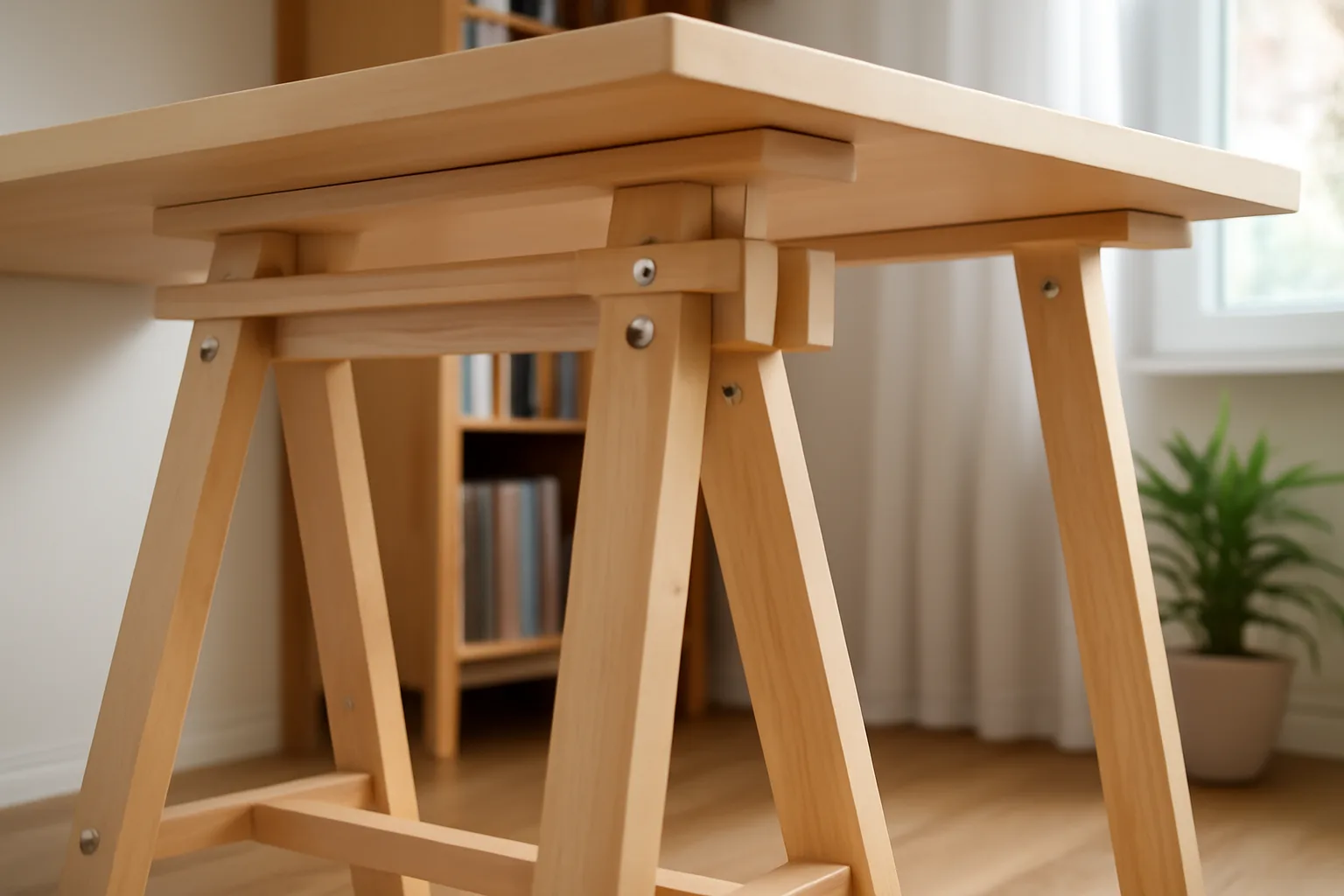
Wood desk frames can last a long time when they are well made and used in the right setting. A solid oak or beech frame in a dry room is not fragile. IKEA’s LAGKAPTEN / MITTBACK desk, for example, uses birch trestles and costs about £105 in the UK. The MITTBACK trestles alone are about £40 each, which is good value if you like the look and do not need sit-stand adjustment.
Where wood wins
Wood makes sense when the desk is mostly static:
- It looks warmer: a wooden trestle desk suits bedrooms and living-room offices better than black steel.
- It can be repaired cosmetically: small knocks can be sanded or touched in.
- It is quiet: no hollow metal resonance or motor housing noise.
- It can age well: solid wood legs can look better after a few years, not worse.
For a laptop, notebook, lamp and one monitor, a wooden frame is often fine. I would happily use one in a spare-room office where the desk stays put and nobody is clamping heavy equipment to the back edge.
Where wood struggles
Wooden frames are less forgiving when loads change. The common issue is not that the leg snaps. It is that screw holes loosen, rails move slightly, or the frame twists after being taken apart.
Engineered wood and cheap pine are the bigger risk. A £60-£120 wooden-look desk from Amazon UK, Argos or Wayfair may use MDF, particleboard or thin veneer rather than a proper hardwood frame. That can still be reasonable value, but it should not be judged like solid joinery.
Humidity is another factor in UK homes. A desk near a radiator, patio door or damp external wall can move a little across seasons. Solid wood handles this if designed properly. Cheap frames with marginal fixings do not.
The repair question
Wood is easier to patch at home, but only up to a point. You can fill a loose screw hole with dowel and wood glue for under £10. You can add angle brackets for £5-£15 from Screwfix or B&Q. That is handy.
With metal, you are more likely to replace a bolt, foot or bracket. With a known brand, that is usually easier. With a no-name frame, you may not find parts at all.
Standing Desks, Monitor Arms and Heavy Loads
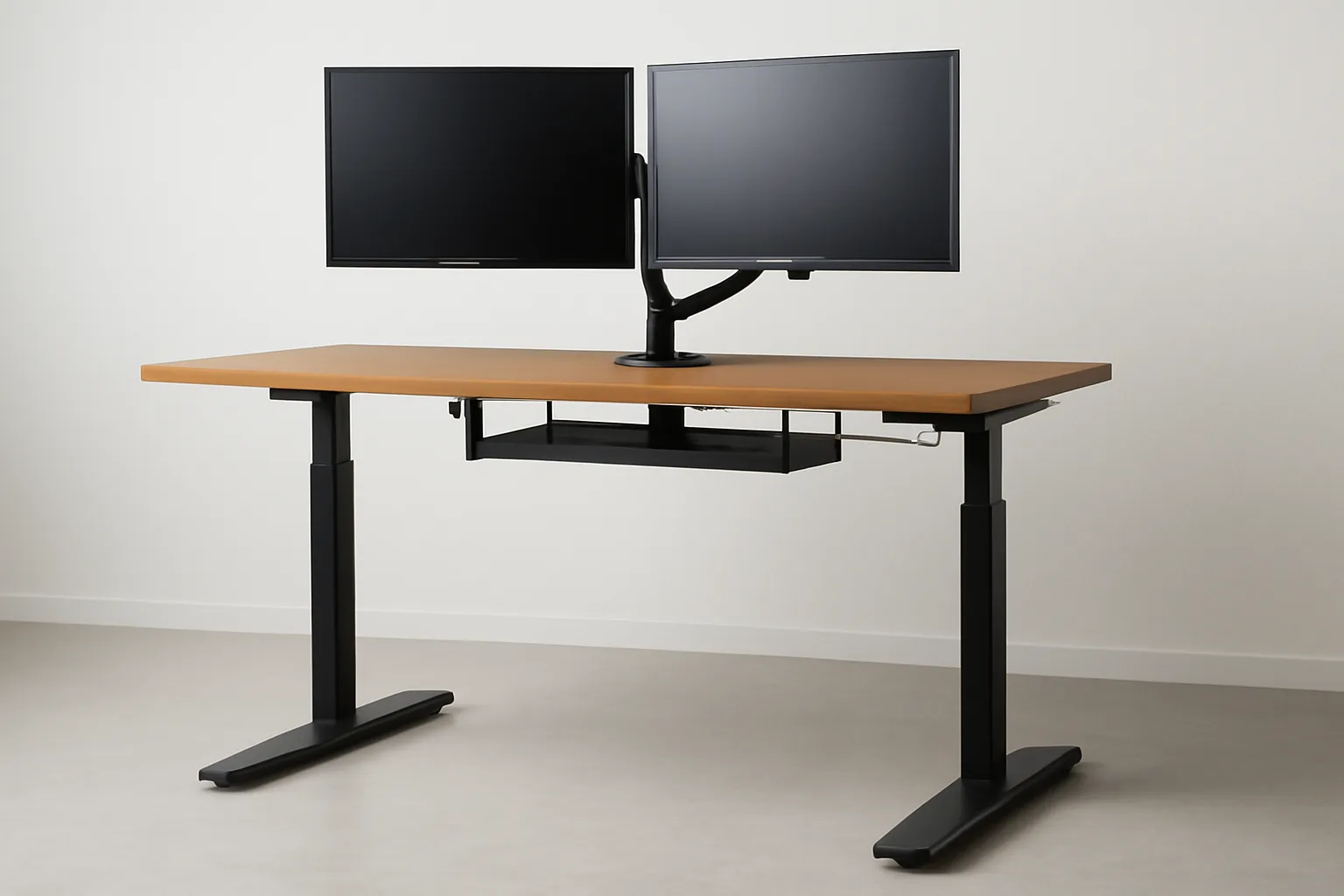
This is where the answer becomes less close. If your setup includes a sit-stand mechanism, clamp-on monitor arms or a heavy desktop, choose metal.
Why standing desks favour metal
Standing desks magnify frame problems because they operate at different heights. A desk that feels fine at 72cm can wobble at 118cm. Add a monitor arm and the movement becomes obvious. If you are still choosing between fixed and adjustable, read standing desk vs sitting desk before paying for a frame.
The HSE’s working safely with display screen equipment guidance is not a product-buying guide, but it does reinforce the basic point: workstation equipment has to suit the user and be adjustable enough to work safely. A frame that cannot hold its position or feels unstable makes adjustment less useful.
For sit-stand use, look for:
- Dual motors: smoother movement and better load handling than many single-motor frames.
- Three-stage legs: often better height range for shorter and taller users.
- Wide feet: more confidence on carpet and under monitor-arm loads.
- Published load rating: ideally 80kg+ for a serious standing desk.
- Spare-part support: controller, handset, motor and foot availability matter after year three.
The load rating is not a challenge target. If a frame says 100kg, I still prefer to keep a normal office setup well below that. A 25kg desktop, two monitors, monitor arm, speakers, laptop and clamp accessories can quietly push past 45kg.
Monitor arms change the equation
A monitor arm adds leverage. The clamp sits on one edge, and the arm turns small desk movement into visible screen movement. If you use a 32-inch or ultrawide monitor, the frame matters more than the desktop finish.
For a single laptop and one 24-inch monitor, wood can be fine. For dual 27-inch screens on arms, I would want a metal frame with a rear rail or very solid leg geometry. Our guide to monitor size for your desk is worth checking if you are building the setup from scratch.
Carpet, uneven floors and old houses
UK home offices are often in spare bedrooms with carpet, wonky floorboards and skirting boards in the way. Adjustable feet are not glamorous, but they matter. Metal frames usually include them. Wooden trestles and decorative legs sometimes do not.
If the room has thick carpet, a wider metal foot often feels calmer than four narrow wooden legs. If the floor slopes, adjustable levelling feet can save you from chasing wobble with folded cardboard. We have all done it. It works, but it is not a buying strategy.
Cost, Repairs and Replacement Parts
Price is where wood looks tempting. You can build a usable wooden trestle desk for about £95-£140 from IKEA parts: two MITTBACK trestles at about £40 each plus a LAGKAPTEN top from about £25-£45 depending on size and finish. That is hard to beat, and it is why the metal vs wood desk frame choice is not only a durability question.
Metal has the better long-term argument when the frame is doing harder work. A fixed steel frame might cost £100-£200. A decent electric standing frame is more like £300-£600, with premium UK-made or Swedish-made options from Friska going higher.
Typical UK price ranges
- Wooden trestle or simple wooden frame: £80-£180 from IKEA, Argos, Amazon UK or Wayfair.
- Fixed steel desk frame: £70-£220 from Amazon UK, Wayfair or specialist desk suppliers.
- Manual metal sit-stand frame: about £150-£250, with IKEA TROTTEN at the lower end.
- Dual-motor metal frame: about £300-£600 for FlexiSpot, Yo-Yo Desk and similar options.
- Premium commercial frame: £700+ for Friska, Herman Miller/Fully-style setups or larger corner frames.
Those numbers move with sales, so treat them as buying bands rather than fixed recommendations.
Repairability verdict
Wood wins for simple DIY repair. Metal wins for repeatable adjustment and part replacement, but only if the brand exists in three years.
For second-hand buying, I would rather buy a used branded metal frame than a used flat-pack wooden desk. A second-hand FlexiSpot, IKEA IDASEN, Herman Miller or Friska frame can be worth considering if the motors work and the controller is present. A used chipboard-and-screw desk often looks cheap because it has already lived its best life.
Our second-hand office furniture checklist covers that inspection process in more detail.
Metal vs Wood Desk Frame Verdict by Setup
Here is the actual answer: metal desk frames last longer for most working desks, especially if the desk moves, adjusts or carries heavy kit. Wood frames can last longer aesthetically in light, static setups because scratches and small dents are easier to live with.
Best choice by use case
- Laptop-only desk: wood or metal; choose the look you prefer, but avoid flimsy particleboard frames.
- One monitor and light accessories: either is fine if the frame has proper bracing.
- Dual monitors: metal, unless the wooden frame is properly solid and wide.
- Sit-stand desk: metal. This is not really a contest.
- Frequent house moves: metal, because bolts and brackets tolerate reassembly better.
- Living-room office: wood can be the nicer choice if the load is modest.
My default recommendation is a metal frame with the desktop material you actually like. That gives you the durability where it counts and the appearance on the surface you see all day.
Biggest mistake
The biggest mistake is buying for the desktop photo and ignoring the frame geometry. Product pages show the top, the colour and the lifestyle shot. They rarely show bracket thickness, rail design or how the legs attach.
If you are buying online, zoom in on the underside images. If there are no underside images, be cautious. A desk frame that hides its fixings may be hiding the bit that decides whether it lasts.
Buying Checklist Before You Order
Before you buy, spend five minutes checking the unglamorous details. It will save you more frustration than debating oak-effect versus walnut-effect finishes, especially if this metal vs wood desk frame decision is for your main work setup rather than an occasional spare-room desk.
Check these details
- Frame material: powder-coated steel, aluminium, solid wood, engineered wood or mixed construction.
- Fixings: bolts into metal inserts are better for repeat assembly than short screws into board.
- Bracing: look for rear rails, central rails or wide trestle geometry.
- Load rating: check the actual kg figure, especially for standing desks.
- Foot width: wider feet help on carpet and with monitor arms.
- Spare parts: known brands are safer if a handset, foot or bracket fails.
- Returns: large desks are annoying to send back, so check collection costs before ordering.
My practical shortlist
For a budget fixed desk, I would consider IKEA’s wooden MITTBACK setup if the load is light, or a basic steel-framed desk from Argos, Wayfair or Amazon UK if it has strong reviews for stability. For a serious sit-stand setup, I would start with FlexiSpot around £329-£500, then compare Friska or Herman Miller/Fully-style options if you want a more premium frame and longer-term parts support.
If the room is small, also check corner desk layouts before committing. A durable frame is only useful if the desk actually fits the room.
Frequently Asked Questions
Is a metal desk frame always better than a wood desk frame? No. Metal is usually better for heavy, adjustable or frequently moved desks, but a well-made wooden frame can be excellent for a fixed laptop or writing desk.
Does a wooden desk frame wobble more? Not automatically. A solid trestle or hardwood frame can be stable, but cheap wooden-look desks with weak screw fixings often loosen faster than steel frames.
What is the best frame material for a standing desk? Steel is the safest choice for a standing desk because the lifting columns, rails and motor brackets need stiffness and repeatable alignment.
How much should I spend on a durable desk frame in the UK? For a fixed frame, budget around £100-£220. For a dual-motor sit-stand frame, expect roughly £300-£600 from UK retailers.
Can I put a wooden desktop on a metal frame? Yes, and it is often the best combination: a durable metal structure with the warmer look of bamboo, oak, walnut veneer or another desktop finish.
Which lasts longer if I move house often? A metal frame usually copes better with repeated dismantling because bolts and brackets are less likely to wear out than screw holes in wood or chipboard.