Industrial style desk setups work best when they look sturdy without turning your home office into a themed bar. The trick is to use the industrial desk setup ideas UK buyers can actually source: a solid wood or wood-effect desk, black metal accents, warm task lighting, and enough cable control that the whole thing still works Monday to Friday. Get those parts right and you can have the exposed-brick look without sacrificing posture, storage, or screen comfort.
In This Article
- The Short Version: What Makes an Industrial Desk Setup Work
- Choosing the Right Industrial Style Desk Setups for Your Room
- Desk Frame, Materials and Finishes That Look Right
- Storage, Walls and Shelving Without Making It Feel Heavy
- Lighting, Cables and Tech That Keep the Look Clean
- Keeping an Industrial Desk Setup Ergonomic
- What to Buy First on a Realistic UK Budget
- Frequently Asked Questions
The Short Version: What Makes an Industrial Desk Setup Work
An industrial desk setup is not just a black desk and an Edison bulb. The good ones have contrast: warm timber against black metal, a few rougher textures, and modern office kit that has been deliberately kept tidy.
For a UK home office, I would start with three decisions before buying anything:
- Surface size: most people working on a laptop plus monitor need at least 120cm wide; dual-monitor setups feel calmer at 140-160cm.
- Material balance: one large wood tone, one black metal element, and one softer material usually looks better than five competing finishes.
- Cable route: plan where the extension lead, monitor cable, charger and lamp cable will go before the desk is pushed against the wall.
The style suits exposed brick, painted plaster, alcoves, garden offices and loft rooms. It can also work in a normal spare bedroom, but you need to be more restrained. A chunky scaffold-board desk, black pipe shelves, black chair, black monitor arm, black wall light and dark rug can feel oppressive in a small UK box room.
My favourite version is the quieter one: a warm oak-effect or reclaimed-pine top, slim black legs, a black task lamp, a muted chair, and one practical shelf above or beside the desk. It still reads industrial, but it does not fight the rest of the house.
Choosing the Right Industrial Style Desk Setups for Your Room
The room decides how far you can push the look. Industrial style is forgiving in a converted garage or garden room; it needs more editing in a bedroom where the desk sits beside wardrobes, curtains and laundry baskets. No judgement, that is where most home offices actually live.
Small spare bedroom
In a small room, keep the industrial cues narrow and vertical. A 100-120cm desk with black metal legs and a single shelf works better than a deep 160cm table that blocks the doorway. Look for a desk around 50-60cm deep if you mainly use a laptop, or 70cm deep if you use a separate keyboard and monitor.
Useful UK options include the IKEA Lagkapten/Alex mix at roughly £80-£150 depending on drawers, or a Wayfair wood-and-metal writing desk around £90-£180. They are not heirloom furniture, but the proportions are right for tight rooms.
Alcove or chimney breast setup
Industrial styling is strong in alcoves because the desk can feel built in. A timber top cut to width and mounted on black brackets gives the right look without bulky legs. Expect to pay about £35-£80 for a laminate or timber-effect worktop offcut, plus £20-£45 for heavy-duty black brackets from Screwfix, Wickes or B&Q.
If the wall is old brick or crumbly plaster, do not guess the fixings. A desk used for real work needs proper support, especially with monitor arms. This is where a local handyman charging roughly £80-£180 for a half-day can be money well spent.
Garden office or converted garage
This is where you can go bigger. A 140-160cm top, black trestle legs, wall shelving and a darker rug can look intentional rather than overdone. The catch is temperature and glare. Garden offices can be bright in summer and cold in winter, so leave space for blinds, a heater and a lamp instead of filling every wall with shelves.
If you are planning a sit-stand version, read our standing desk setup ideas for health before buying the frame. Industrial tops can be heavy, and not every budget frame likes a thick scaffold-board surface.
Rented home
Renters should avoid anything that needs rawlplugs, masonry drilling or permanent pipe shelving unless the landlord has agreed. You can still get the look with a freestanding desk, a clamp-on monitor arm, a freestanding metal shelving unit, and a black or bronze desk lamp.
Our home office ideas for renters go deeper on reversible choices, but the main point is simple: make the furniture carry the style, not the walls.
Desk Frame, Materials and Finishes That Look Right
The desk is the visual anchor, so get the top and legs right before worrying about accessories. Industrial style desk setups tend to fail when every item shouts for attention. The desk should look solid, but it should still be comfortable enough to use for a full workday.
Desktop materials
Wood-effect laminate is the sensible option for most people. It costs less, wipes clean, and does not warp as easily as a cheap real-wood board in a heated spare room. A 120-150cm laminate worktop or desktop usually costs £40-£120 from IKEA, B&Q, Wickes or online office furniture shops.
Solid wood looks better, especially if you want a reclaimed feel, but it needs more care. A scaffold-board-style top or butcher-block desktop can cost £120-£350 depending on size and finish. Check the surface before using it with a mouse; rough timber looks great in photos and then annoys you every day.
Glass is the one I would avoid for this style unless you are deliberately mixing industrial with modern. It reflects light, shows fingerprints, and can feel cold with black metal. We covered the practical downsides in our glass desks pros and cons guide.
Frame choices
Black powder-coated steel is the easiest win. Hairpin legs cost about £35-£70 a set, box-section legs are often £60-£130, and basic black trestles can be under £50. If you are using a heavy top, check the load rating and the width between legs so the desk does not wobble while typing.
Pipe-style frames look more obviously industrial, but they can be a nuisance. They are often deeper than expected, awkward near skirting boards, and not always comfortable if your knees sit close to the front rail. I like them for shelves more than desks.
Finish combinations that work
Keep the palette tight:
- Warm wood plus black metal: the safest option and easiest to buy in the UK.
- Pale oak plus charcoal: good for small rooms because it keeps the setup lighter.
- Dark walnut plus concrete grey: strong in garden offices, but too heavy in many bedrooms.
- Reclaimed pine plus matte black: great if the rest of the room is plain and uncluttered.
If you already have a black monitor, black speakers and a black chair, resist buying a black desktop as well. Too much black makes dust, fingerprints and cable clutter more obvious. A wood surface hides daily use better.
For more on surface trade-offs, our desk materials guide is worth reading before you spend on a custom top.
Storage, Walls and Shelving Without Making It Feel Heavy
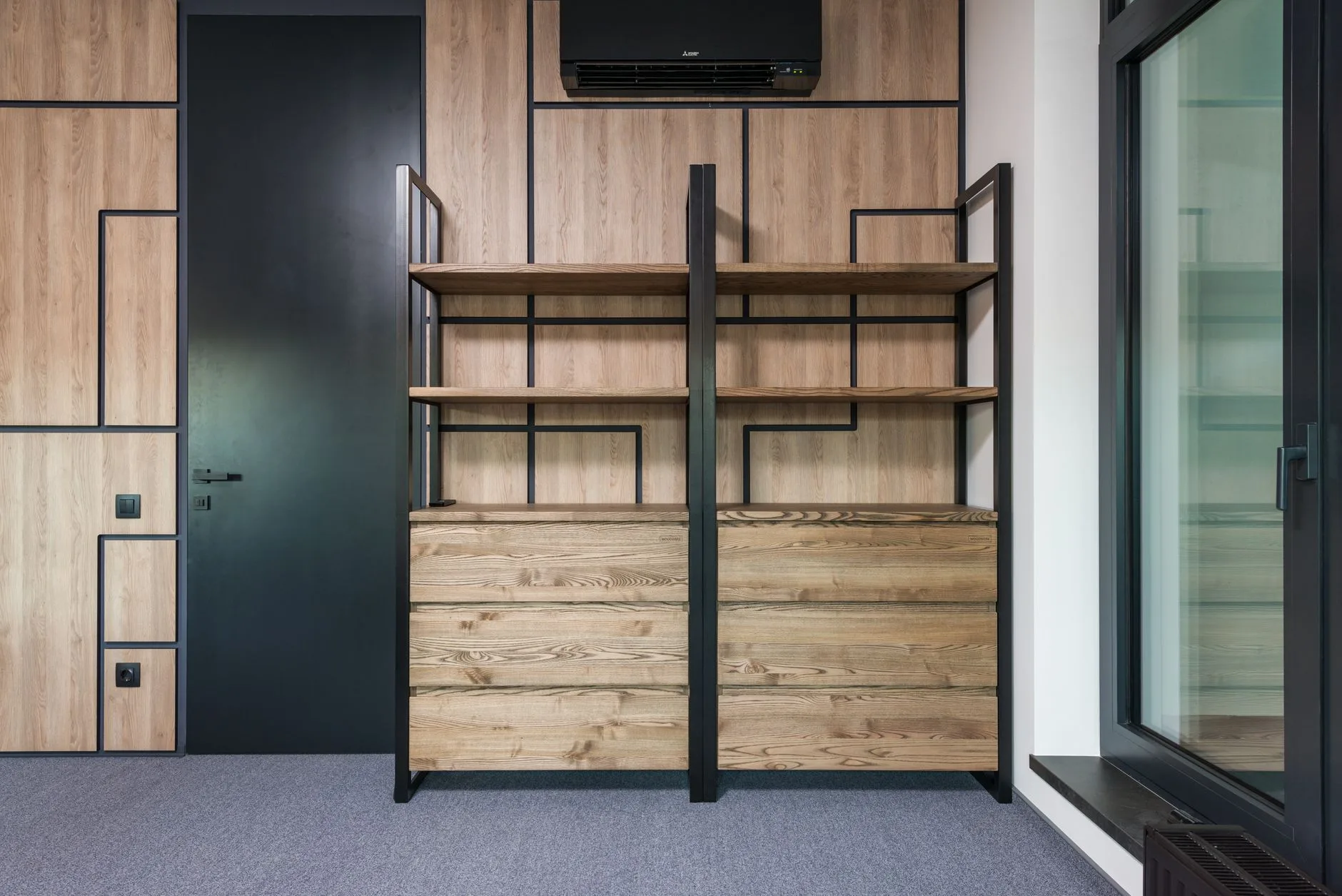
Industrial storage is where people overdo it. The Instagram version has shelves full of cameras, books, filament bulbs, plants and old metal boxes. The workday version needs somewhere for notebooks, chargers, paperwork and the thing you keep moving because it has no home.
Open shelves
A single black metal and wood shelf above the desk can look excellent. Two shelves can work if the wall is wide. Three shelves over a small desk often feel like a pub display. Keep the lowest shelf high enough that you do not feel boxed in when sitting.
Budget about £25-£60 for a simple wall shelf from IKEA, Dunelm, B&Q or The Range. Heavier industrial shelving can run £80-£200, especially if it uses real timber and welded steel.
If you use open shelves, make them earn their keep:
- Top shelf: books, archive boxes, spare tech you rarely touch.
- Middle shelf: daily notebook, camera, headphones or small plant.
- Desk surface: only the kit you use while working.
That last point matters. An industrial setup can handle texture, but it still looks poor when the desk is covered in receipts and cables. Our desk clutter reduction guide has the practical sorting system I would use before buying more storage.
Filing and hidden storage
Industrial desks often lack drawers, which looks clean until you need somewhere to put pens, spare USB-C adapters and paperwork. A slim black pedestal can solve this for about £50-£120. IKEA Alex drawers are less industrial, but they work if you choose the dark finish and let the desk frame provide the style.
For a softer look, use canvas storage boxes or kraft file boxes rather than shiny plastic tubs. They stop the setup feeling too office-like.
Wall treatment
Exposed brick is the classic backdrop, but fake brick wallpaper usually looks worse close up than it does in product photos. If you rent or do not have brick, a warm grey, taupe or clay paint is a better bet. It gives the industrial mood without pretending to be something it is not.
Peel-and-stick panels can work behind a monitor, but check samples first. Cheap panels often have repeated patterns that become obvious once the screen light hits them.
Lighting, Cables and Tech That Keep the Look Clean
Lighting and cable management decide whether an industrial desk setup feels designed or just dark. This style uses heavier materials, so you need light in the right places.
Task lighting
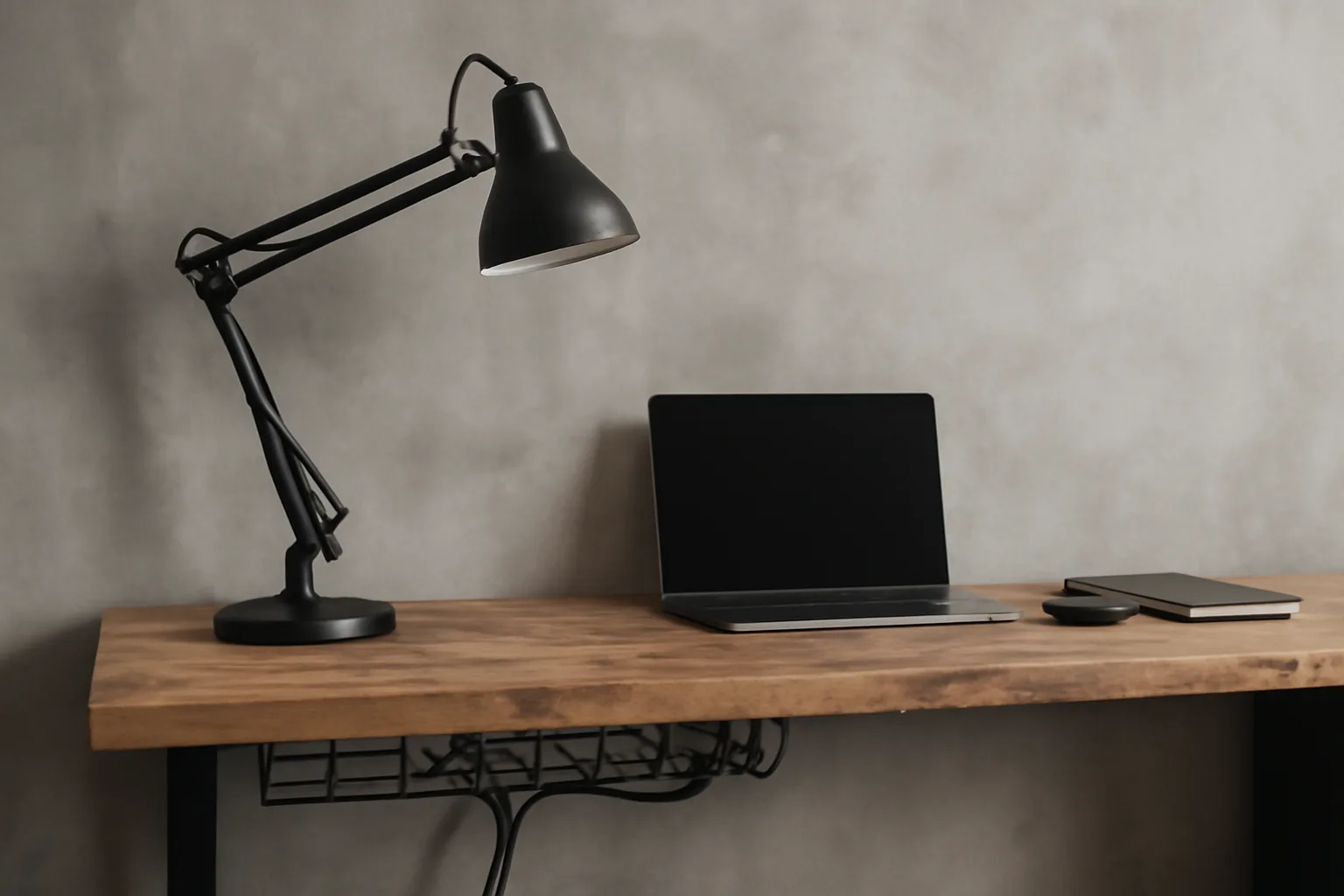
A black metal task lamp is the easiest accessory to justify. It fits the style and does something useful. IKEA, Dunelm and John Lewis usually have decent options in the £20-£80 range. Anglepoise-style lamps cost more, often £90-£250, but the adjustability is genuinely useful if you write notes or sketch.
Avoid bare Edison bulbs as your only light. They look warm, but they are often poor for screen work and can cause glare. A shaded LED task lamp with a 2,700K-4,000K bulb is more practical. Warm white is better for evening; neutral white is better for detailed work.
Cable management
Industrial style shows structure, not mess. Let the black frame and shelf brackets be visible; hide the dangling power cable.
The basic shopping list is cheap:
- Under-desk cable tray: about £15-£35 from Amazon UK, IKEA, Screwfix or office suppliers.
- Reusable cable ties: £5-£10.
- Adhesive clips: £4-£8, useful for lamp and charger leads.
- Four- or six-way extension lead: usually £10-£25, but buy from a reputable UK retailer.
If you use multiple screens, our desk cable tray guide is the cleaner route than sticking everything to the back of the monitor. Keep power bricks off the floor where they collect dust and get kicked.
For electrical safety, do not daisy-chain extension leads just because the cable run looks neater. Electrical Safety First has clear guidance on using extension leads safely, and it is worth following if your desk has a monitor, laptop charger, lamp, speaker and heater all nearby.
Monitors and arms
A black monitor arm suits the look and frees desk space. Decent single arms cost about £30-£80; dual arms are more like £60-£150. Check the VESA mount and weight before buying. Heavy ultrawide monitors need stronger arms than cheap listings suggest.
If you are building around a large screen, our monitor size guide will help you avoid a desk that looks good but leaves the screen too close to your face.
Keeping an Industrial Desk Setup Ergonomic
Style is allowed. Pain is not. The most expensive industrial desk setup is still a bad buy if the monitor is too low, the chair is wrong, and the surface depth forces your shoulders forward.
The Health and Safety Executive has practical display screen equipment guidance covering workstation setup, breaks and screen positioning. You do not need to make your home office look corporate, but the same body mechanics apply.
Chair choice
This is where I would not chase the industrial look too hard. Vintage leather dining chairs, metal stools and wooden cafe chairs might photograph well, but they are poor for eight-hour workdays. Use a proper office chair and let the desk, lamp and shelving carry the style.
A decent UK office chair starts around £120-£250. Better ergonomic chairs are usually £300-£700. If you want the chair to blend in, choose black, charcoal, tan leather-look or muted fabric rather than bright gaming colours.
Our desk chairs under £500 guide has better value options than most furniture-store desk chairs.
Monitor height
Industrial desks are often built from thick tops, which can raise the working surface. That is fine for looks, but it can put your keyboard too high. Your elbows should sit roughly level with the desk surface, with shoulders relaxed.
Use a monitor riser, arm or shelf if the screen sits too low. Do not solve a low monitor by shrugging your shoulders all day. The fix is usually £25-£80, not a new desk. Our monitor height guide explains the setup in more detail.
Desk depth
Depth is the quiet ergonomic issue. A 45cm decorative desk looks tidy in photos but is poor for a monitor, keyboard and wrists. For serious work, 60cm is the minimum I would accept, and 70-80cm is better for larger monitors.
If your room cannot handle a deep desk, consider a wall-mounted monitor arm and a compact keyboard. That keeps the industrial look while giving your hands and eyes a better working distance.
What to Buy First on a Realistic UK Budget
You do not need to buy the whole setup in one go. The best order is desk, lighting, cable management, then storage. Accessories come last. That order gives the biggest daily improvement for the least regret.
Budget setup: about £180-£350
This is enough for a convincing industrial look if you already have a chair and monitor.
- Desk: IKEA or Wayfair wood-and-black-metal desk, £80-£180.
- Lamp: black task lamp from IKEA, Dunelm or John Lewis, £20-£60.
- Cable tray and clips: £20-£40.
- Shelf or small drawer unit: £40-£100.
Spend more on the desk surface than novelty accessories. A fake-vintage clock will not make a wobbly desk better.
Mid-range setup: about £450-£900
This is the sweet spot for most UK home offices. Use a better top, stronger frame, proper chair and cleaner lighting.
- Desktop and frame: worktop plus black legs or a better ready-made desk, £180-£400.
- Chair: ergonomic office chair, £180-£400.
- Monitor arm: £40-£100.
- Lighting and cable management: £50-£120.
- Storage: slim pedestal or metal shelving, £60-£160.
At this level, I would rather have a plain but comfortable chair than a pretty industrial chair that ruins your back.
Premium setup: £1,000+
Premium makes sense if the room is a permanent office. A sit-stand frame, custom timber top, proper chair and built-in shelving can look brilliant and work hard.
Expect rough UK costs of:
- Quality sit-stand frame: £300-£700.
- Custom or solid-wood top: £200-£600.
- Ergonomic chair: £400-£1,000.
- Joinery or fitted alcove shelving: often £500-£1,500+ depending on size.
- Electrician for extra sockets or wall lighting: commonly £150-£400 for smaller jobs, more if wiring is awkward.
If you are spending this much, measure properly. Our guide to measuring your space for a new desk is boring in the useful way. It can save you from buying a beautiful desk that blocks a radiator or door swing.
Common buying mistakes
The biggest mistakes are predictable:
- Buying for photos, not work: a narrow console table is not a desk.
- Going too dark: black desk, black wall, black chair and black accessories can feel gloomy in UK winter.
- Ignoring power: one socket behind a heavy desk is a daily irritation.
- Overloading shelves: open storage only works if you edit what goes on it.
- Choosing texture over comfort: rough timber, hard chairs and glare-prone bulbs get old quickly.
My final take: build the setup around one strong wood-and-metal desk, then keep everything else useful. Industrial style should add character, not create another maintenance job.
Frequently Asked Questions
What is an industrial style desk setup? It is a home office setup that uses materials like wood, black metal, exposed brick, concrete tones and practical task lighting. The best versions still work like normal desks, with good cable management, monitor height and chair support.
How much does an industrial desk setup cost in the UK? A budget setup can be done for about £180-£350 if you already own a chair and monitor. A better mid-range setup is usually £450-£900, while a custom sit-stand or fitted alcove setup can pass £1,000.
Can industrial style work in a small bedroom office? Yes, but keep it lighter. Use a wood top, slim black legs, one shelf and a task lamp rather than dark walls, bulky pipe shelving and oversized furniture.
Are pipe desks good for working from home? They can look good, but check the knee space, depth and stability before buying. Pipe frames can be awkward near skirting boards and may wobble if the top is heavy or poorly braced.
What chair suits an industrial desk? A proper ergonomic office chair is usually the right answer. Choose black, charcoal, tan or muted fabric if you want it to blend with the style, but do not use a hard dining chair for full workdays.
What should I buy first? Buy the desk and chair first, then add task lighting, cable management and storage. Industrial accessories are easy to add later; an uncomfortable desk is harder to fix.