Bohemian home office ideas UK readers can use well are less about piling a room with macrame and more about making a warm, textured workspace that still lets you draw, write, edit, plan and take calls without fighting your own furniture. The trick is to choose a few natural materials, keep the desk surface calm, and hide the boring kit well enough that the room still feels personal at 9am on a wet Tuesday.
In This Article
- Bohemian Home Office Ideas UK: The Short Version
- Start With a Desk That Looks Warm but Still Works
- Layer Rugs, Curtains and Texture Without Making the Room Fussy
- Use Open Storage That Shows Materials, Not Mess
- Bring in Plants and Natural Objects Without Losing Desk Space
- Get the Lighting Right for Creative Work
- Pull the Look Together on a Real UK Budget
- Frequently Asked Questions
Bohemian Home Office Ideas UK: The Short Version
A bohemian office works when it feels collected rather than themed. Think timber, cane, jute, linen, ceramics, paper, plants and warm light. The desk still has to support a laptop, monitor, sketchbook or audio kit, but the room should not feel like a grey spare-bedroom workstation dragged home from an office clearance sale.
The best version for most UK homes is restrained: a warm desk, one good rug, one tactile storage material, one plant group, and a lamp that makes evening work bearable. That gives you the relaxed creative feel without turning the room into a prop cupboard.
For a small box room, I would start with these pieces:
- A warm desk: pale oak, bamboo, walnut effect or a white top on wooden trestles. IKEA’s LAGKAPTEN / MITTBACK desk is about £105 in the UK and suits the look better than a glossy black gaming desk.
- A proper chair: choose comfort first, then soften the look with colour or texture. A John Lewis Format Office Chair is around £129; a tan or natural office chair tends to sit better in this style than black mesh.
- A rug with texture: Dunelm jute rugs run from about £35 to £315 depending on size, and a 120 x 170cm rug is usually enough under a compact desk.
- Closed storage somewhere nearby: open shelves look bohemian only until invoices, chargers and printer paper take over.
This is also where bohemian office design often goes wrong. Too many woven baskets, trailing plants and tiny objects make the workspace feel busy. If you do visual work, that clutter competes with your screen or sketchbook. If you write, it becomes another reason to fiddle.
I use a simple test: if you clear the laptop away, would the desk still look like a place where someone makes things? If yes, you are in the right territory. If it looks like a shop display, strip it back.
Start With a Desk That Looks Warm but Still Works
The desk sets the tone. For bohemian home office ideas UK homes can live with, warm wood beats ornate carving. You need surface area, cable routes and stable legs before you worry about styling.
Choose the desk by use, not by mood board
A writing or admin setup can manage on 100-120cm wide. A drawing tablet, second screen, sewing machine, MIDI keyboard or product photography mat needs closer to 140-160cm. If you are torn between a prettier narrow desk and a plain wider one, buy the wider one and make it look better with the lamp, chair and storage.
Good UK options:
- Budget: IKEA LAGKAPTEN / SPAND desk, about £40 for a 120 x 60cm setup. It is not heirloom furniture, but it gets you a clean surface cheaply.
- Mid-range: IKEA LAGKAPTEN / MITTBACK, about £105 for 140 x 60cm, with wooden trestles that suit a relaxed studio feel.
- Storage-led: IKEA LAGKAPTEN / ALEX, about £80-£165 depending on finish and drawer combination. It is less airy, but better if you own a lot of stationery or camera bits.
- Vintage route: a second-hand pine table from Facebook Marketplace, eBay or a local antiques centre, usually £60-£180. Check wobble, depth and leg clearance before falling for the patina.
The depth matters more than people think. A 45cm-deep console table might look perfect on Pinterest, then force your laptop, notebook and mug into a cramped line. For a monitor, 60cm depth is the practical minimum; 70-80cm feels much calmer if the room allows.
Keep the ergonomic basics quiet but present
Bohemian does not mean ignoring posture. The Health and Safety Executive’s display screen equipment guidance covers home workers as well as fixed workstations, and the plain lesson is useful: screen, keyboard, chair and working surface all need to fit the person using them.
That can still look good. Put a slim monitor arm behind the screen, use a cork or felt desk mat, and choose a chair in cream, tan, olive or soft grey rather than default black. If you already have pain at the desk, read our ergonomic desk setup checklist before spending £80 on wall art.
For chairs, I would not buy a low cane dining chair as the main office chair unless the work sessions are short. It may photograph beautifully, but after two hours your back will have opinions. A John Lewis Format at about £129, a Toronto at about £199, or a second-hand Herman Miller, Humanscale or Orangebox chair at about £180-£450 is a better foundation. Add a linen cushion if you want softness; do not sacrifice adjustability.
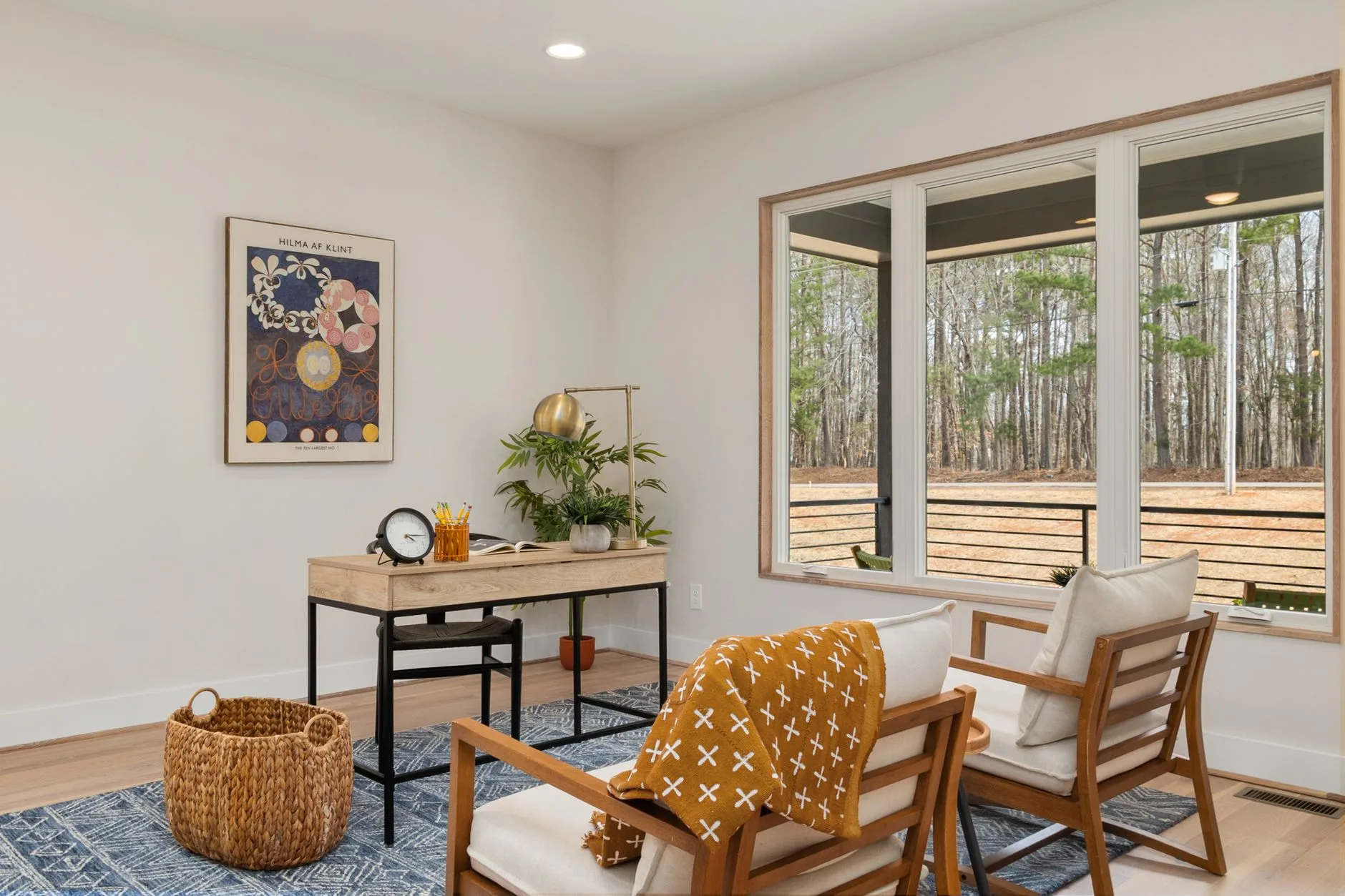
Layer Rugs, Curtains and Texture Without Making the Room Fussy
Texture is the fastest way to move a home office away from bland. It also helps a room feel less echoey on calls, especially in new-build rooms with hard floors and empty walls.
Use one big texture, then smaller supporting ones
Start with the rug. A jute rug, flatweave wool rug or washable cotton rug grounds the desk and makes the office feel more intentional. Dunelm’s jute options start around £35 for small pieces and climb past £300 for large sizes; IKEA flatwoven rugs often sit around £35-£120. For a desk chair with castors, use a low-pile rug or a clear chair mat. Deep shag and office wheels are a tedious pairing.
Curtains can do more than blinds in this style because they add softness from floor to ceiling. Linen-look ready-made curtains from Dunelm or IKEA are often £35-£90 a pair. If the room is also a spare bedroom, heavier curtains help the office disappear at night. That matters more than another decorative print.
Good texture combinations:
- Jute and oak: warm, simple and easy to find from IKEA, Dunelm and Habitat.
- Cork and cream: useful for desk mats, pinboards and small shelves without making the room dark.
- Rattan and white walls: good in small UK rooms because the furniture looks light rather than bulky.
- Terracotta and olive: works well with plants and old timber, but keep it to accents if the room is north-facing.
The common mistake with bohemian home office ideas UK shoppers find online is buying five different “natural” finishes that fight each other. Pale bamboo, orange pine, dark walnut, yellow jute and grey rattan can all be natural and still look muddled. Pick two wood tones at most. If the desk is pale oak, keep shelves, frames and lamp bases near that family.
For more desk-surface choices, our guide to desk mat materials is useful because cork, felt and leather all change the feel of a workspace without requiring new furniture.
Use Open Storage That Shows Materials, Not Mess
Bohemian storage should make useful things easy to grab. It should not expose every cable, receipt and backup notebook you own.
Split storage into display and working zones
Use open shelves for attractive, frequently used items: sketchbooks, ceramics, reference books, headphones, plant pots, a good-looking camera or art supplies in jars. Use closed boxes for ugly but necessary things: spare HDMI leads, tax paperwork, printer cartridges, batteries and packaging.
A practical mix for a small creative office:
- One open shelf: IKEA LACK or BERGSHULT shelves are usually about £10-£35 depending on size and brackets.
- Two woven baskets: seagrass or water hyacinth baskets from H&M Home, Dunelm or IKEA are often £12-£35 each.
- One drawer unit: IKEA ALEX drawers are around £65-£90 and make the room much easier to reset after work.
- One desktop tray: a wooden, cork or metal tray at £8-£25 keeps pens, clips and sticky notes from spreading.
The visible layer needs restraint. Three beautiful notebooks on a shelf look intentional. Sixteen half-used pads look like procrastination with handles. I like one shelf for display and one drawer for reality.
Cable storage matters too. Woven baskets are not good for extension leads because heat and dust can build up, and you still need access. Use a metal under-desk cable tray, usually £18-£35 from Amazon UK or IKEA, and run one braided cable sleeve down the back leg. That gives you the easy bohemian look without a nest under the desk.
If clutter is your real problem, read how to reduce desk clutter before buying more baskets. Storage should remove friction, not give clutter better outfits.
Bring in Plants and Natural Objects Without Losing Desk Space
Plants are part of the bohemian look, but the desk is not a greenhouse. The best plant choices sit off the work surface or use vertical space.
Choose plants by light and neglect tolerance
For most UK home offices, pothos, snake plant, ZZ plant, peace lily and spider plant are safer than fussy tropical plants. A pothos in a hanging pot can trail from a shelf without taking desk space. A snake plant can sit beside the desk and tolerate a missed watering. A peace lily looks good but sulks if the room dries out.
Budget roughly:
- Small desk plants: £4-£12 from IKEA, B&Q, supermarkets or local garden centres.
- Medium floor plants: £18-£45 for snake plants, palms or rubber plants.
- Pots and baskets: £6-£30 each depending on ceramic, terracotta or seagrass.
- Plant stands: £15-£60 from Dunelm, IKEA, Habitat or second-hand marketplaces.
Place plants where they will not get knocked when you turn in the chair. That sounds obvious until a trailing pothos catches a headphone cable and a pot of compost joins a Zoom call.
Natural objects can do some of the same visual work with less maintenance. A ceramic pen pot, cork pinboard, wooden picture ledge, linen notice ribbon or stoneware mug adds texture without needing light. If the room is dim, use those first and add one reliable plant rather than three doomed ones.
Our guide to the best indoor plants for your desk setup goes deeper on plant choice, but for this article the rule is simple: use plants to soften the workspace, not to shrink it.
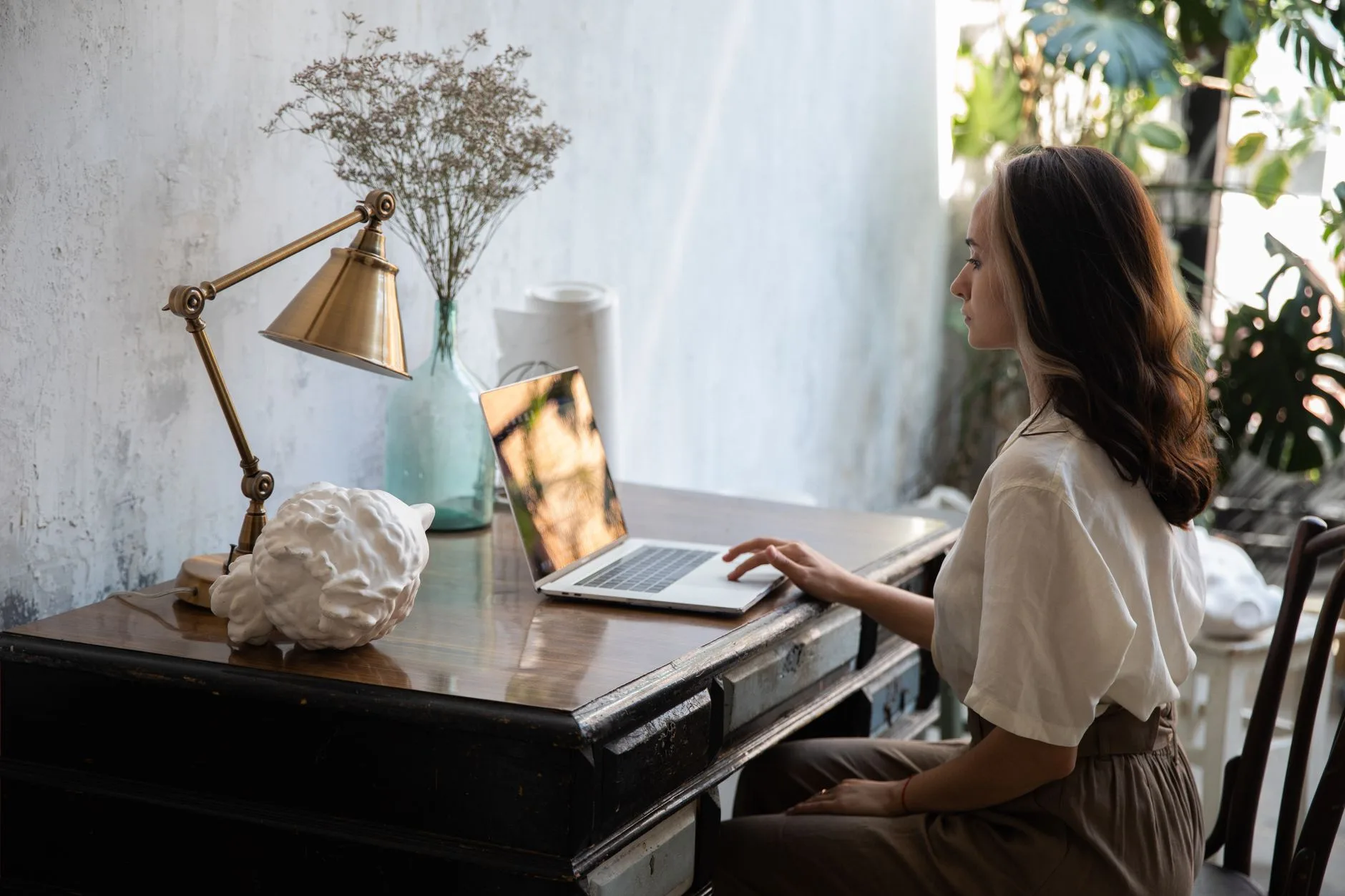
Get the Lighting Right for Creative Work
Lighting decides whether a bohemian office feels warm or gloomy. UK spare rooms often have one central ceiling pendant, one small window and a desk shoved into the corner. That is not enough for drawing, editing, reading proofs or working past 4pm in January.
Build three layers of light
Use a task lamp for the work, a warm lamp for the room, and daylight from the window without glare across the screen. The HSE’s good posture guidance for DSE also points to screen position and comfort; in practice, glare and awkward monitor placement usually turn up together.
For a bohemian office, I would use:
- Task lamp: an adjustable metal, ceramic or wooden lamp, about £25-£90 from IKEA, John Lewis, Habitat or Anglepoise if spending more.
- Ambient lamp: a rattan, paper or fabric-shade table lamp, about £18-£70 from Dunelm, IKEA or H&M Home.
- Warm bulb: 2700K for relaxed evening light; 4000K can be better for detailed colour work, but it feels less cosy.
- Glare control: sheer curtains, a side-on desk angle, or a monitor arm rather than putting the screen directly opposite the window.
The lamp shade matters. A rattan lamp can throw patterned shadows, which looks lovely on a wall and annoying over a sketchbook. Keep decorative lamps off to the side and use a clearer task lamp for the working surface.
If your work is colour-sensitive, keep one neutral light source for checking final colours. A very warm bulb can make paint, fabric, product photos or design work look better than it really is. I would use the warm lamp for atmosphere and a high-CRI task lamp for actual colour decisions.
For screen-heavy work, pair this with our monitor glare tips and desk lamps for eye comfort guides. Bohemian styling should make the room nicer to work in, not harder to see.
Pull the Look Together on a Real UK Budget
You can build a bohemian home office in the UK for under £250 if you already own a chair, or £450-£700 if you are starting from an empty room. Spend first on the items that change comfort and daily use: desk, chair, light, storage. Spend last on prints and decorative objects. That is the useful lens for bohemian home office ideas UK readers can copy without creating a room full of decorative clutter.
Three realistic budget levels
Under £250 works if the chair is already sorted. Use an IKEA LAGKAPTEN / SPAND desk at about £40, a Dunelm or IKEA rug at £35-£60, a task lamp at £25-£40, two baskets at £25-£50 total, and plants/pots at £25-£50. Add a second-hand shelf or picture ledge. It will not look expensive, but it can look warm and coherent.
Around £500 is the sweet spot. I would buy a sturdier desk around £100-£180, a proper adjustable chair around £129-£229, a rug around £60-£120, lighting around £60-£120, and storage around £50-£90. This gives you a room that works every day rather than a pretty corner that becomes annoying by Thursday.
At £900+, spend on the chair, not the trinkets. A used premium ergonomic chair, a solid timber desk, wool rug and better lighting will outlast trend pieces. A Desser rattan chair at about £90 looks good as a reading chair, but it is not the chair I would sit in for a full workday. Use character chairs for secondary seating.
What I would buy first
My order would be:
- Desk and chair: get the height, depth and support right first.
- Lighting: one task lamp and one warm side lamp change the room instantly.
- Rug or curtains: choose whichever softens the largest blank area.
- Storage: one closed unit, two natural baskets and one tray beat a dozen small containers.
- Plants and art: add slowly so the room feels collected, not themed overnight.
There is a good overlap with our home office ideas for renters because removable shelves, freestanding storage and rugs do a lot of work without upsetting landlords. If you like a stronger visual style, compare it with our industrial style desk setups and dark vs light desk setups before buying. Bohemian suits creative rooms because it accepts texture, tools and visible materials. It fails only when the styling starts getting in the way of making things.
Frequently Asked Questions
What colours work best for a bohemian home office? Warm white, oatmeal, olive, terracotta, clay, tan and muted pink work well. Keep the walls calmer if the desk, rug and plants already add a lot of texture.
Can a bohemian office still be ergonomic? Yes. Use an adjustable chair, sensible screen height and a deep enough desk, then soften the look with natural finishes, rugs, lamps and storage.
What is the cheapest way to make a home office look bohemian? Start with a jute or flatweave rug, a warm lamp, two woven baskets and one plant. That can cost about £80-£150 if you shop at IKEA, Dunelm and supermarkets.
Are rattan chairs good for working from home? Rattan chairs are better as occasional chairs than full-day office chairs. For daily work, choose an adjustable office chair and use rattan in shelves, baskets or a side chair.
How do you stop a bohemian office looking cluttered? Limit the visible materials, use one closed drawer unit, and keep the main desk surface mostly clear. Display a few useful objects rather than every creative tool you own.
What size desk works best for a creative bohemian office? A 120cm desk is fine for laptop work, but 140-160cm is better if you use a monitor, drawing tablet, sewing machine or large sketchbook.